Gresham College provides outstanding educational talks and videos for the public free of charge. There are over 2,500 videos available on our website. Your support will help us to encourage people's love of learning for many years to come.
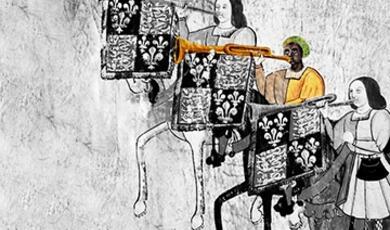
Africans have been present in England for more than two thousand years, but we rarely see them or hear about them. And often their existence is dismissed as a figment of 'political correctness' or 'wokism.' This lecture will critically assess the myth of England's story as a 'sacred white space' and examine the evidence for diversity in medieval and early modern history. Africans are integral to English history and forgetting this diminishes Englishness, by preventing us from understanding ourselves.
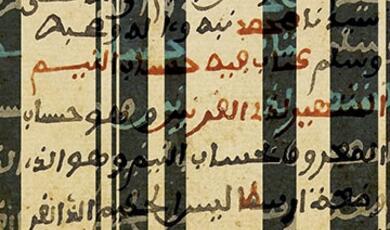
The Malian city of Timbuktu is one of the world's oldest seats of learning and has an intellectual legacy of hundreds of thousands of manuscripts, coming from three great West African desert empires. These manuscripts offer a unique window into their history. This lecture will look at how their study can be used to advance our knowledge of the intellectual history of the premodern world.
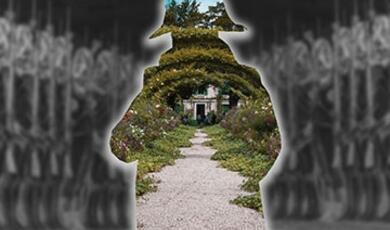
This lecture will explore Napoleon‘s life through his interactions with the natural world and a series of gardens that were important to him during the rise and fall of his power. The point of doing this is to approach his life from oblique angles, exploring material that is often overlooked.
Despite the controversy, evolution was widely accepted by many naturalists within a few years of the Origin’s appearance. An important reason for this rapid triumph was Darwin’s botanical works. Seen through evolutionary eyes, plants proved to be mobile, carnivorous, sensitive – even crafty.

This lecture examines the centuries long presence of the African diaspora as an integral part of Britain’s history since Roman times. Unfortunately, this history is still too often ignored, its promotion limited only to October.
This lecture examines the work of Hugo de Vries, a Dutch botanist who was one of the first to claim that science would allow plants and animals to be designed to order.
Sydney’s botanic garden, founded in the early nineteenth century, was expected to ship new plants 'home' to the Royal Botanic Gardens, Kew, from where they could be transplanted to other colonial gardens, to see if they could become valuable new crops to enrich the British Empire.