Gresham College provides outstanding educational talks and videos for the public free of charge. There are over 2,500 videos available on our website. Your support will help us to encourage people's love of learning for many years to come.
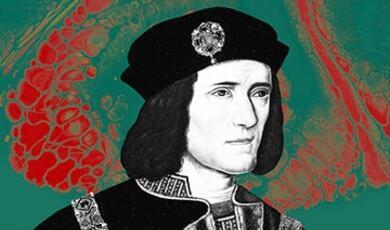
The skeleton of Richard III was discovered beneath a Leicester car park in 2012. Forensic techniques were used to analyse injuries to the skull, rib and pelvis.
In 1977 or thereabouts a collection of scientists huddled around a secret radio receiver in the US desert. This was the start of GPS, Glonass, Gallileo and the whole navigation industry. But how does this technology work? And are there situations when it does not work?
It is now easier to breach the security of people’s personal and business lives than perhaps at any time in recent human history. Technology has brought unimaginable speed, scale and reach to hackers.
Could AI replace stand-up comedians and scriptwriters? This may not be an impossible dream if you accept that nothing we do is forever beyond the scope of computer modelling.
Cyberwar is not waged on physical battlefields following rules of engagement. Aggressors worry less about collateral damage, in part because they aren’t forced to confront the sight of an enemy bleeding to death before their eyes.
Even the most humdrum of electrical devices nowadays contains at least one computer; yet surprisingly few people are aware of their history, their form or function. In this talk we will see that not only is the history of computers rich and diverse, their architecture likewise.

Niklaus Wirth said Algorithms + Data Structures = Programs. But programs are more than that. They are ubiquitous in modern life, but only a tiny minority of the population know how to program.
Humans use computers to do gigantic calculations which would be impossible to do by hand – for example, weather prediction. But could an AI go beyond that and come up with a proof of a theorem which has stumped humankind?
Data structures are the critical ingredient of all good information systems. Poor data structures lead to horrendous problems of interoperability and nightmarish complexity; good ones can make the ‘uncomputable’ computable.