Gresham College provides outstanding educational talks and videos for the public free of charge. There are over 2,500 videos available on our website. Your support will help us to encourage people's love of learning for many years to come.
Darwin’s Descent of Man was dominated by the theory of sexual selection, which Darwin used to explain peacock’s tails, but also to argue that white people were as superior to black ones as men were to women.
Despite the controversy, evolution was widely accepted by many naturalists within a few years of the Origin’s appearance. An important reason for this rapid triumph was Darwin’s botanical works. Seen through evolutionary eyes, plants proved to be mobile, carnivorous, sensitive – even crafty.
When Darwin finally published the On the Origin of Species, he tried to avoid controversy by ignoring human origins. Yet evolution was soon being attacked as the godless ‘monkey theory’.
Following the Beagle voyage, Darwin settled down to a quiet married life, relying on correspondence to gather facts. He wrote thousands of letters as he gathered facts to support his still-secret theory.
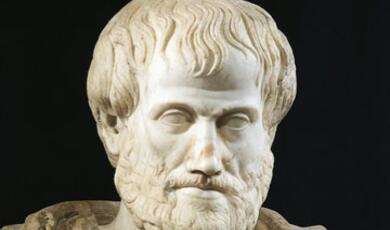
This lecture looks at the archaeological site of the Lyceum, discovered accidentally in 1996, and asks how the remains can illuminate Aristotle’s life, work, and incomparable contribution across academic disciplines, from Political Theory and Aesthetics to Zoology, Physics and Astronomy.

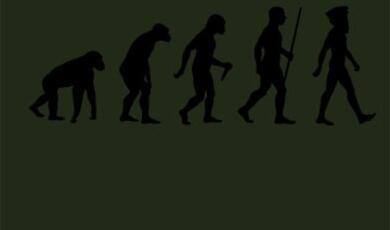
In celebrating 500 years since the birth of Sir Thomas Gresham, Professor Jones will examine how changes since the sixteenth century have affected the evolution of human beings.
Nick Lane will explore the importance of energy flow in shaping life from its very origins to the flamboyant complexity around us, and ask whether energy flow would direct evolution down a similar path on other planets.
Excavations have recently uncovered much evidence of Roman London, including fragments of 405 waxed stylus writing-tablets that can be dated to AD 50-90. Roger Tomlin explains how he deciphered the tablets and what can be learned from them.
Roman London was founded on the banks of the Thames to take advantage of the tidal river for traffic trade and communications. But precisely where were the bridge and the harbour, and what did they look like?