Gresham College provides outstanding educational talks and videos for the public free of charge. There are over 2,500 videos available on our website. Your support will help us to encourage people's love of learning for many years to come.
The criminalisation of religious speech before the ordinary courts in England began in 1676. Although the law on blasphemy was finally abolished in 2008, many of the troubling aspects of the old law remain in the form of the offence of incitement to religious hatred.
Charles II‘s illegitimate son, the Duke of Monmouth, became one of the most influential and powerful men at the Restoration court. He married a Scottish heiress, Anne Scott, and together they became leaders of fashion and taste.
When England’s Reformation began, only a small band of idealists – or fanatics – truly wanted a Protestant England. Nevertheless, within a single lifetime, they achieved it.
The English Reformation – unlike many of the other Reformations convulsing sixteenth-century Europe – was at heart more about politics and law than about religion.
Most English people initially saw the Reformation as an unexpected catastrophe, wrenching their religious lives out of shape, and stripping their communities of resources they had naively believed belonged to them.
Father and son, William and Robert Cecil, not only dominated politics for much of Elizabeth I and James I reign but dominated architectural fashion. Building a series of spectacular houses, they, and not the monarchy, were the great palace builders of their age.

England’s Catholic Reformation is the reformation that sixteenth-century England nearly had: a reformed and renewed English Catholic Church, its new schools and revived parishes matched with a firm smack of discipline.
A family best known for producing one of England’s most famous queen consorts started out owning substantial estates in Norfolk before buying, and inheriting, a series of major houses close to London.
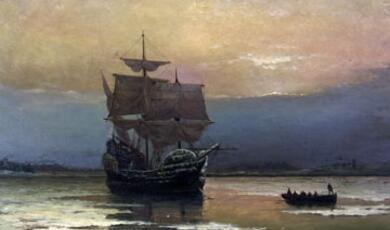
The story of the Mayflower is usually presented as a tale of persecuted Pilgrims crossing the Atlantic in circumstances of grave adversity to inhabit a desolate wilderness.