Gresham College provides outstanding educational talks and videos for the public free of charge. There are over 2,500 videos available on our website. Your support will help us to encourage people's love of learning for many years to come.
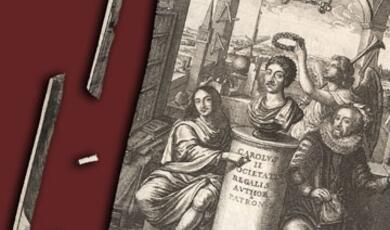
When Thomas Sprat’s The History of the Royal-Society of London appeared in 1667, it was less a history than a manifesto for the future, designed to convince Charles II that experimental research was a worthwhile investment.
In this lecture we follow his early years, when he published The World of Art, a provocative Russian journal, exhibited Russian visual art in Paris, and then brought Russian music there, culminating in his production of Musorgsky’s opera Boris Godunov.

This lecture explores how the partnership worked during the 1940s, drawing in collaborators from many backgrounds who also excelled, and benefiting from the extraordinary conditions of wartime Britain.
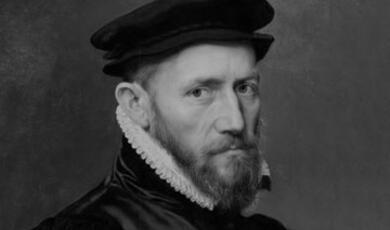
Dr John Guy presents a special illustrated lecture to commemorate the 500th Anniversary of the birth of the College’s founder and benefactor Sir Thomas Gresham.
Jonathan Bate will track Keats to Hampstead and tell of the extraordinary circle of writers – opium-eater Thomas De Quincey, essayist Charles Lamb, master-critic William Hazlitt – who wrote for The London Magazine, until its gifted editor was killed in a duel with a rival critic.
This series has argued that the origins of modern secularism lie in the age of the Renaissance. This last lecture will track that legacy down to the present.
Why did Gresham finance and build it? What did Londoners (and others) do there? And what does the Exchange tell us about Gresham's ambitions both for himself and for London?
The newly discovered Salvator by Leonardo, the world’s most costly picture, is one of his most notable creations, in which he used his ‘science of art’ to transform a stock subject into a profound expression of the ineffability of the divine. We will look at the remarkable story of its discove