Gresham College provides outstanding educational talks and videos for the public free of charge. There are over 2,500 videos available on our website. Your support will help us to encourage people's love of learning for many years to come.
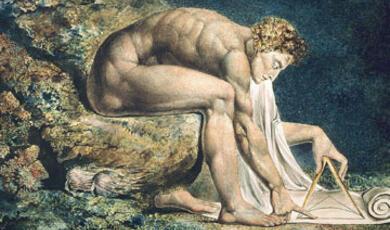
Isaac Newton saw his demonstration of the regularity of the universe as having great religious significance. Newton’s ideas were initially seen as very supportive of religion; yet within 50 years, they were being seen in a very different light.
Catherine Roach uncovers what we learn from the romance story about today’s changing norms for gender and sexuality and about the nature of happiness and love.
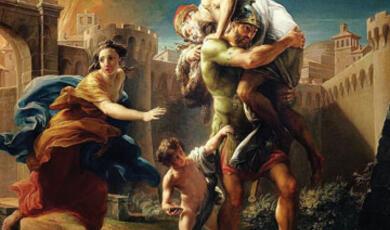
Homer’s Iliad, the earliest Greek poem, narrates the archetypal war between ‘Europeans’ and ‘Asiatics’ divided by the Hellespont. Looking at Wolfgang Peterson’s blockbuster Troy (2004), the lecture describes the genesis of the Iliad between the Mycenaean Late Bronze Age and the 8th centu
What did the sky-watchers of the ancient world think about the night sky, and its implications for human existence? Moving on to the great discoveries of Copernicus, Kepler, and Galileo, we will consider the basic science and ask about the deeper significance of these discoveries.
The 1920s in China saw both the political chaos of warlordism, but also a flowering of creativity which drew on the keen awareness by many of China’s potential as part of a global modernism.
Samuel Palmer, in his Shoreham period in the 1820s and 30s, seized on the long tradition of classical pastoral landscapes, and wrested it into an English idiom.
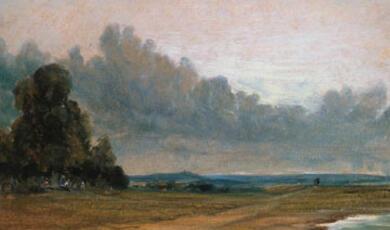
Constable's Stour landscapes of the Regency period, during and just after the War with France, and his publication English Landscape Scenery, champion local and low-key rural England.
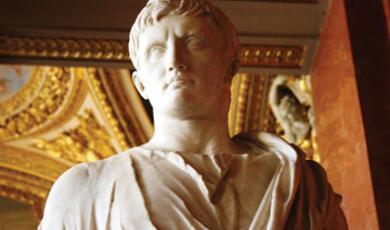
Mary Beard, Professor of Classics at the Univeristy of Cambridge, Fellow of Newnham College, and Royal Academy of Arts Professor of Ancient Literature - who is also well-known for her media appearances - will speak on the fascinating topic of images of Roman Emperors.

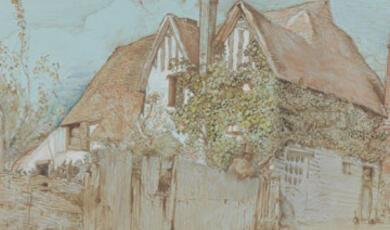
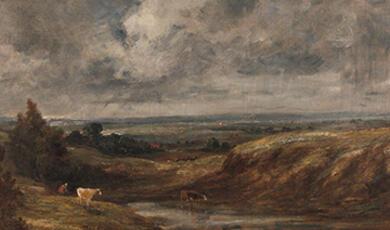
The late eighteenth and early nineteenth- century vogue for the Picturesque and for forging an English landscaping tradition (with frameable landscape scenery and managed wildness) will be the starting point for discussion.