Gresham College provides outstanding educational talks and videos for the public free of charge. There are over 2,500 videos available on our website. Your support will help us to encourage people's love of learning for many years to come.
An economic model for news that have existed for 200 years or more is disappearing. Are we facing the prospect of societies without 'news' as previously understood? And why does it matter?
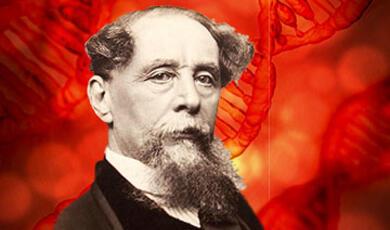
Charles Dickens's expert eye for detail enabled him to describe many medical conditions in his writings. Dickens also suffered with a number of medical conditions which will be discussed in detail during the lecture.
A dialogue with Philip Pullman's complex 'Dark Materials' trilogy which provides a framework for discussing how human beings relate to the material world, and the origin of evil.
South Africa’s Dutch Reformed Church (DRC) and the Afrikaner people it served had, since the 17th century drawn a distinction between white ‘Christians’ and the apparently unconvertible ‘heathen’ peoples around them. Theology legitimised apartheid, but was also instrumental in its end.

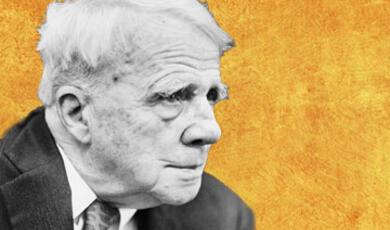
Frost's line, 'I found a dimpled spider... holding up a moth like a white piece of rigid satin cloth' exploits simile... But how can a moth be like cloth? -This is one of a number of examples that will be explored with a view to refining our understanding of smilie.
Can we give a purely scientific account of human nature in terms of its physical, chemical and biological components. Richard Dawnkins' 'The Selfish Gene' is considered to see how a scientific narrative about selfish genes might correlate with a theological narrative about sin.
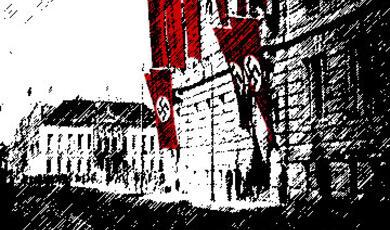
An exploration of how so many Christians came to support Nazism, and how some managed to oppose it: from the dejudaised Christianity of the ‘German Christian’ movement, to illicit collaboration of the supposedly anti-Nazi 'Confessing Church'.
There was a time when old places were valued simply for their beauty and interest, but now this is not enough. Are calculations of the financial contribution of our history adding to the value of our heritage or have they fundamentally devalued it?
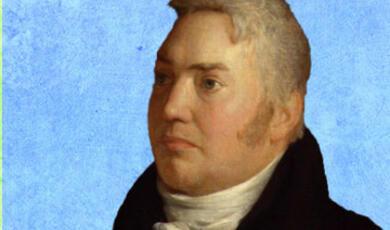
In the line, 'The Western wave was aflame', the 'Western wave' refers to the sea. But is it this simple? What do forms of substitution, synecdoche for example, lend to this magnificent and shadowy poem?