Gresham College provides outstanding educational talks and videos for the public free of charge. There are over 2,500 videos available on our website. Your support will help us to encourage people's love of learning for many years to come.
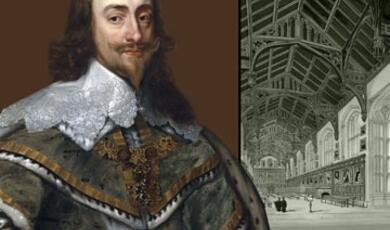
During the Civil War Charles I’s court, denied access to its usual country residences, was forced to set itself up in a series of makeshift locations. The most important of these was Oxford which Charles converted into a large and well-organised courtly campus.
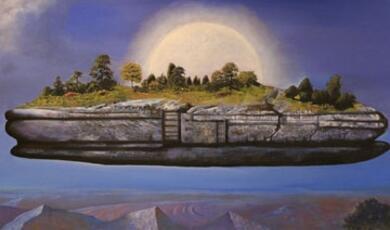
This lecture will begin with Bacon’s imagined garden, then consider the long-term promise of the experimental or scientific garden, which would eventually lead to today’s biotechnologies.
In this lecture we follow his early years, when he published The World of Art, a provocative Russian journal, exhibited Russian visual art in Paris, and then brought Russian music there, culminating in his production of Musorgsky’s opera Boris Godunov.

This lecture explores how the partnership worked during the 1940s, drawing in collaborators from many backgrounds who also excelled, and benefiting from the extraordinary conditions of wartime Britain.
This series has argued that the origins of modern secularism lie in the age of the Renaissance. This last lecture will track that legacy down to the present.
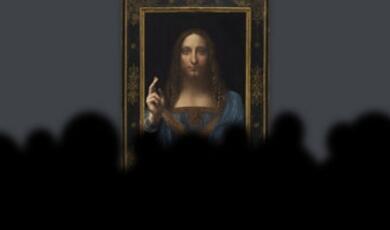
The newly discovered Salvator by Leonardo, the world’s most costly picture, is one of his most notable creations, in which he used his ‘science of art’ to transform a stock subject into a profound expression of the ineffability of the divine. We will look at the remarkable story of its discove
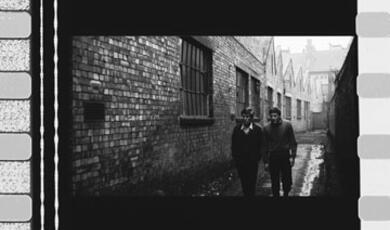
In the 1960s, British filmmakers broke out of the studio to find new subjects among the young, fashionable and disadvantaged, seen in their natural habitats – not only in the North and Midlands, but in unfamiliar parts of London.
The changing balance of power and wealth between the aristocracy and the monarchy from the sixteenth to the nineteenth century has fundamentally influenced today’s national cultural landscape of art and architecture.