Gresham College provides outstanding educational talks and videos for the public free of charge. There are over 2,500 videos available on our website. Your support will help us to encourage people's love of learning for many years to come.
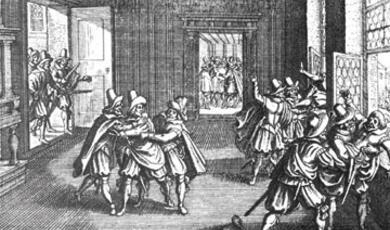
Professor Wilson will examine the causes, conduct and consequences of the Thirty Years’ War, Europe’s most destructive conflict prior to the two 20th-century world wars.
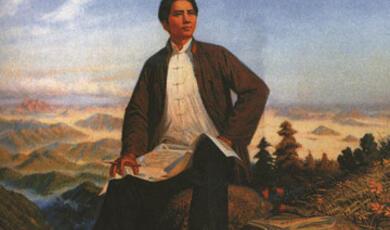
The establishment of the People’s Republic of China in 1949 gave Chinese artists a government that had explicit policies for the arts, seeing them as an essential part of the creation of ‘new China’.
Recent psychological research has looked at the importance of meaning to human beings, and how this works out in core questions about the relation of science and faith.
Professor Tallis seeks to rescue time from the jaws of physics, examining the claims that time is merely the fourth dimension of space-time, that there is a ‘passage’ of time or that time has a direction or arrow.
What are the implications of the Big Bang for our understanding of ourselves? Is the universe meaningless? or is there some way of developing a ‘big picture’ of reality that helps us decide our place and purpose in the universe.
The lecture asks how the ancient fables address power relations in a slave society. Were they primarily stories for and by slaves, or did they serve ruling-class interests?
This lecture looks at our changing understanding of ourselves, focussing on Charles Darwin’s theory of human origins and the religious, scientific and ethical questions raised.
After the founding of the Chinese Communist Party in 1921, many artists and intellectuals in China saw the overthrow of ‘tradition’ as the means to rescue the nation from poverty and backwardness.
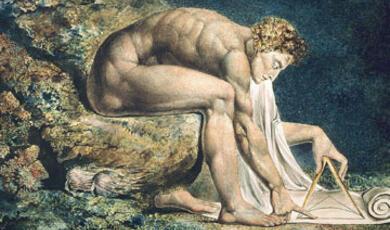
Isaac Newton saw his demonstration of the regularity of the universe as having great religious significance. Newton’s ideas were initially seen as very supportive of religion; yet within 50 years, they were being seen in a very different light.
What did the sky-watchers of the ancient world think about the night sky, and its implications for human existence? Moving on to the great discoveries of Copernicus, Kepler, and Galileo, we will consider the basic science and ask about the deeper significance of these discoveries.