Gresham College provides outstanding educational talks and videos for the public free of charge. There are over 2,500 videos available on our website. Your support will help us to encourage people's love of learning for many years to come.
What are the implications of the Big Bang for our understanding of ourselves? Is the universe meaningless? or is there some way of developing a ‘big picture’ of reality that helps us decide our place and purpose in the universe.
Quantum science has been one of the most successful and useful theories ever invented. Indeed quantum technology was added as the ninth of the original eight great technologies.
Matter consists of a mêlée of elementary particles. There are protons and neutrons, made up of quarks, and many other short-lived massive particles. One hope is to discover particles of dark matter, but this has so far eluded our best efforts.
Euler’s pioneering equation, the ‘most beautiful equation in mathematics’, links the five most important constants in the subject: 1, 0, π, e and i. So what is this equation – and why is it pioneering?
In this lecture I will describe the mathematics of machine learning and explain its applications to robotics. In particular I will show how the modern ideas of deep learning allow a robot to make sense of the world it exists in, including the ideas behind speech and face recognition.
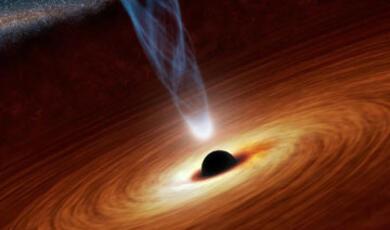
View the sky through an x-ray telescope and the conception of the universe changes dramatically. Black holes are best seen in x-rays, because impinging gas collides with the black hole at near light speed, resulting in intense x-ray and gamma ray emission.

Isaac Newton saw his demonstration of the regularity of the universe as having great religious significance. Newton’s ideas were initially seen as very supportive of religion; yet within 50 years, they were being seen in a very different light.
We live in an information age, with vast amounts of data constantly sent around the world. This lecture will introduce you to the mathematics of information.
Theories of the multiverse suggest that life-containing universes are incredibly rare. We live in one of these, whether by cosmological natural selection or by the consequences of a theory yet to be formulated.
What did the sky-watchers of the ancient world think about the night sky, and its implications for human existence? Moving on to the great discoveries of Copernicus, Kepler, and Galileo, we will consider the basic science and ask about the deeper significance of these discoveries.