Gresham College provides outstanding educational talks and videos for the public free of charge. There are over 2,500 videos available on our website. Your support will help us to encourage people's love of learning for many years to come.
Is science complete in itself, or does it act as a pointer or signpost to matters beyond its boundaries? C.S. Lewis argued that nature bears witness to the existence and nature of God, and developed the idea in works such as 'Miracles' and 'The Chronicles of Narnia.'
In the first three minutes after the beginning of the universe, all of the stuff that we and the Earth are made of were created and the universe attained its huge size, homogeneity and isotropy.
Amongst all his astronomical allusions, Shakespeare demonstrates a deep knowledge of the night sky and its movements, including the new Copernican world-view. What can we learn of Elizabethan astronomy and Shakespeare's knowledge of it from the plays?

How can we find the best explanation of what we observe? Why do human beings enjoy pondering puzzles, such as the meaning of life? We can we learn much from Dorothy L. Sayers, whose detective novels and religious writings saw human beings as searching for 'patterns' in life.
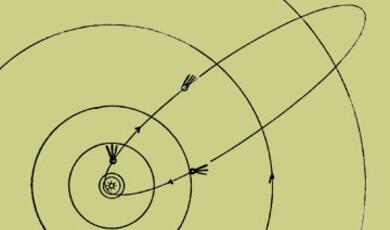
A retelling of one of the most staggering scientific discoveries of modern times: that the universe is expanding, and that proof for it can be found in the discovery of the recession of the galaxies.
We glimpse something of God in the beauty of the world, but then this seems to be contradicted by the evil and suffering. Drawing on the insights of the Christian faith how can we live with this contradiction? - Lord Harries in In dialogue with Professor Alister McGrath.