Gresham College provides outstanding educational talks and videos for the public free of charge. There are over 2,500 videos available on our website. Your support will help us to encourage people's love of learning for many years to come.
Despite the controversy, evolution was widely accepted by many naturalists within a few years of the Origin’s appearance. An important reason for this rapid triumph was Darwin’s botanical works. Seen through evolutionary eyes, plants proved to be mobile, carnivorous, sensitive – even crafty.

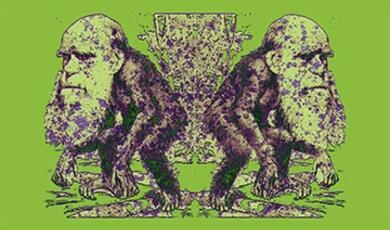
When Darwin finally published the On the Origin of Species, he tried to avoid controversy by ignoring human origins. Yet evolution was soon being attacked as the godless ‘monkey theory’.
Following the Beagle voyage, Darwin settled down to a quiet married life, relying on correspondence to gather facts. He wrote thousands of letters as he gathered facts to support his still-secret theory.
This lecture examines the work of Hugo de Vries, a Dutch botanist who was one of the first to claim that science would allow plants and animals to be designed to order.
Sydney’s botanic garden, founded in the early nineteenth century, was expected to ship new plants 'home' to the Royal Botanic Gardens, Kew, from where they could be transplanted to other colonial gardens, to see if they could become valuable new crops to enrich the British Empire.
This lecture will begin with Bacon’s imagined garden, then consider the long-term promise of the experimental or scientific garden, which would eventually lead to today’s biotechnologies.
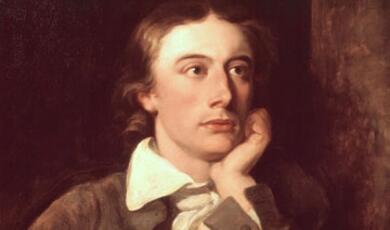
Jonathan Bate will track Keats to Hampstead and tell of the extraordinary circle of writers – opium-eater Thomas De Quincey, essayist Charles Lamb, master-critic William Hazlitt – who wrote for The London Magazine, until its gifted editor was killed in a duel with a rival critic.
We will need an aggressive strategy to ensure the safety of agricultural yields and food in the future especially in drought- prone and even temperate zones.