Gresham College provides outstanding educational talks and videos for the public free of charge. There are over 2,500 videos available on our website. Your support will help us to encourage people's love of learning for many years to come.
We live in an information age, with vast amounts of data constantly sent around the world. This lecture will introduce you to the mathematics of information.
What do judges do in the Family Court? Follow me through a virtual week as a Roving Judge. Learn what goes on behind the scenes: how the family court room works and who is needed to make it work.
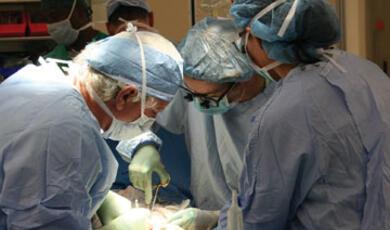
This week marks the 50th anniversary of the first human heart transplant. This talk will celebrate that achievement and consider what we have learned over those 50 years and what is to happen in the future.
How, as a Marxist, did he justify the seizure of power and would the October Revolution have been possible without him? How in this centenary year, are these events being commemorated in Putin’s Russia?
The Conservative Party is the oldest and one of the most successful political parties in the democratic world. It has been, for many years, the natural party of government. What is the secret of the party's extraordinary longevity and electoral success?
Few people are lucky enough to save lives or change them for the better. Few also experience the horror of losing lives or worsening them. In this lecture I want to share some of the astonishing experiences of a paediatric heart surgeon.
Can we give a purely scientific account of human nature in terms of its physical, chemical and biological components. Richard Dawnkins' 'The Selfish Gene' is considered to see how a scientific narrative about selfish genes might correlate with a theological narrative about sin.
The lecture will cover the history of the western world as seen through the food that nourished builders for the Great Pyramids, free men of the Roman Empire, the expansion of Christianity, and the development of Europe.
There is a tension between clinical teams and the families of devout Jehovah’s Witnesses. This lecture explores that tension, and considers how we might perform open-heart surgery without blood.
Early in 2016, the criminal and civil courts of England and Wales embarked on a modernisation programme aimed at reforming procedures that have survived for centuries. The hope is to set up the courts of the future. Will this project be the forward-thing success we hope for, or an IT disaster?