Gresham College provides outstanding educational talks and videos for the public free of charge. There are over 2,500 videos available on our website. Your support will help us to encourage people's love of learning for many years to come.
Matter consists of a mêlée of elementary particles. There are protons and neutrons, made up of quarks, and many other short-lived massive particles. One hope is to discover particles of dark matter, but this has so far eluded our best efforts.
Asthma, an intermittent disease, is the commonest lung disease in the UK. The second is chronic obstructive pulmonary disease (COPD). This lecture will consider trends and advances in these two diseases, and the chronic genetic lung disease cystic fibrosis.
This lecture looks at our changing understanding of ourselves, focussing on Charles Darwin’s theory of human origins and the religious, scientific and ethical questions raised.
There is an apparent conflict between the increase in technology in medicine and the importance of a relationship between patient and doctor. This Valentine’s Day lecture considers the importance of that relationship.
A movement is emerging with the aim of developing Greater London as the world’s first National Park City. But is there any significant environmental advantage to this and would London benefit from becoming one?
Nick Lane will explore the importance of energy flow in shaping life from its very origins to the flamboyant complexity around us, and ask whether energy flow would direct evolution down a similar path on other planets.
The extent of the problem of software bugs in the medical arena, and elsewhere, suggest an increasing number of avoidable deaths and injuries in UK hospitals.
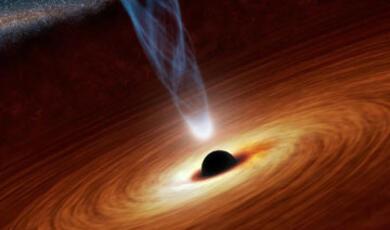
View the sky through an x-ray telescope and the conception of the universe changes dramatically. Black holes are best seen in x-rays, because impinging gas collides with the black hole at near light speed, resulting in intense x-ray and gamma ray emission.

Professor Steve Jones will consider sunshine and its effects on health, on sleep, on memory and more: and why today’s twilight world of tablets and smart-phones is taking us back to the middle ages.
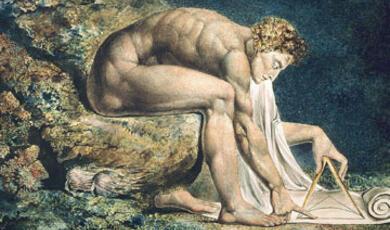
Isaac Newton saw his demonstration of the regularity of the universe as having great religious significance. Newton’s ideas were initially seen as very supportive of religion; yet within 50 years, they were being seen in a very different light.