Gresham College provides outstanding educational talks and videos for the public free of charge. There are over 2,500 videos available on our website. Your support will help us to encourage people's love of learning for many years to come.
In this lecture we follow his early years, when he published The World of Art, a provocative Russian journal, exhibited Russian visual art in Paris, and then brought Russian music there, culminating in his production of Musorgsky’s opera Boris Godunov.
After Stalin’s death in 1953, successive leaders tried to find ways to revitalise the Soviet regime and rethink its promises to the Soviet people. Life within a system no longer based on terror and intense industrial transformation offered citizens strange alternatives.
How, as a Marxist, did he justify the seizure of power and would the October Revolution have been possible without him? How in this centenary year, are these events being commemorated in Putin’s Russia?
George VI was the unexpected king. His human qualities reinforced the spirit of social solidarity which helped Britain to victory in war and recovery in peace.
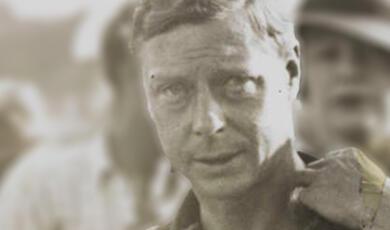
Edward VIII reigned for just 325 days. The history of his reign is in large part the history of the abdication. However, as Prince of Wales, Edward had been the first heir to the throne to find a genuine role for himself, as a spokesmen for the ex-service generation.
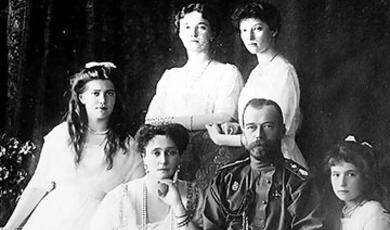
To mark the anniversary of the Russian Revolution, the dilemmas of modern empire and monarchy will be discussed, firstly in general terms and then specifically in terms of Russia.
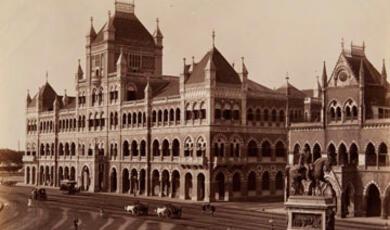
A discussion of the rise and fall of the British Empire through the history of ten cities, exploring how their architectural, planning, and commercial history elucidates their place within the imperial story.
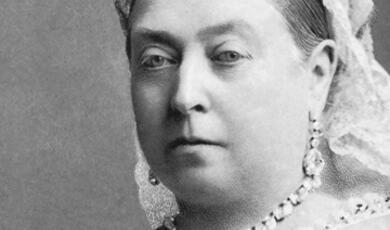
Queen Victoria was the first constitutional monarch. The Crown had become the symbol not only of British nationhood but also of Empire. How did this come about?