Gresham College provides outstanding educational talks and videos for the public free of charge. There are over 2,500 videos available on our website. Your support will help us to encourage people's love of learning for many years to come.
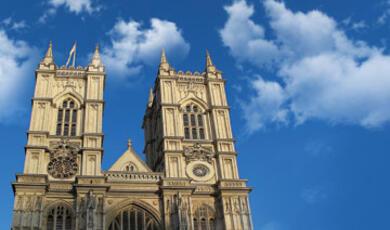
Bishop Richard Chartres will present a survey in five acts of the history of London's faith communities, with a word about their prospects in the 21st century.
We shall investigate the implications for the future of international conflict and of national defence. If preparations for the next war have already started, can we tell who is winning?
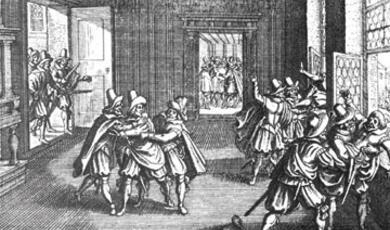
Professor Wilson will examine the causes, conduct and consequences of the Thirty Years’ War, Europe’s most destructive conflict prior to the two 20th-century world wars.
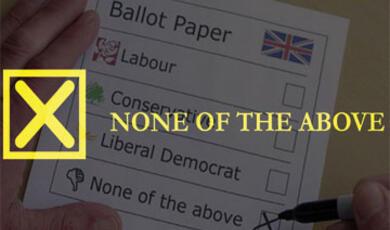
Between 1951 and 1959, over 95% of voters supported the two major parties. Since 1983, fewer than 80% have voted Conservative or Labour. How is the decline of the two party system to be explained?
Recent psychological research has looked at the importance of meaning to human beings, and how this works out in core questions about the relation of science and faith.
Professor Tallis seeks to rescue time from the jaws of physics, examining the claims that time is merely the fourth dimension of space-time, that there is a ‘passage’ of time or that time has a direction or arrow.
After Stalin’s death in 1953, successive leaders tried to find ways to revitalise the Soviet regime and rethink its promises to the Soviet people. Life within a system no longer based on terror and intense industrial transformation offered citizens strange alternatives.
This lecture looks at our changing understanding of ourselves, focussing on Charles Darwin’s theory of human origins and the religious, scientific and ethical questions raised.
The Labour Party was formed in 1900 as a coalition between trade unions and socialist intellectuals with the aim of securing representation for the working class in parliament.
Housing represents the main asset class held by UK households and we shall try to understand why it is held as such a large share of assets. We shall then outline whether this choice has other knock on effects in the economy such as labour and social mobility.