Gresham College provides outstanding educational talks and videos for the public free of charge. There are over 2,500 videos available on our website. Your support will help us to encourage people's love of learning for many years to come.
International negotiations concerning our environment such as on climate and biodiversity, often put the scientific case behind economic and political interests, with potentially disastrous consequences. What does that mean for human prosperity and even survival?
There is a seismic shift underway in economics, hastened by the aftermath of the Covid-19 pandemic. Communities and countries around the world are beginning to adopt/consider adopting well-being and prosperity as major guiding principles.
The baby boomers have accumulated assets and have generous occupational pensions. Should they pass these assets to their descendants, with the risk of growing inequality, or should they be taxed to benefit society as a whole? Is inheriting morally dangerous? Or are inheritance taxes theft?
Despite the controversy, evolution was widely accepted by many naturalists within a few years of the Origin’s appearance. An important reason for this rapid triumph was Darwin’s botanical works. Seen through evolutionary eyes, plants proved to be mobile, carnivorous, sensitive – even crafty.

How has Covid-19 re-shaped our ideas about what we owe society? The lockdown has had a terrible impact on the economic prospects of young people, and the elderly have suffered from high mortality in care homes.
This lecture examines the work of Hugo de Vries, a Dutch botanist who was one of the first to claim that science would allow plants and animals to be designed to order.
Sydney’s botanic garden, founded in the early nineteenth century, was expected to ship new plants 'home' to the Royal Botanic Gardens, Kew, from where they could be transplanted to other colonial gardens, to see if they could become valuable new crops to enrich the British Empire.
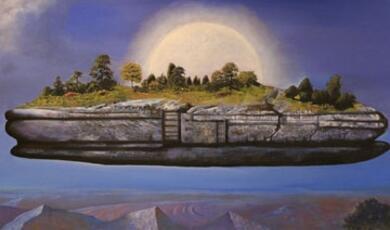
This lecture will begin with Bacon’s imagined garden, then consider the long-term promise of the experimental or scientific garden, which would eventually lead to today’s biotechnologies.
We will need an aggressive strategy to ensure the safety of agricultural yields and food in the future especially in drought- prone and even temperate zones.