Gresham College provides outstanding educational talks and videos for the public free of charge. There are over 2,500 videos available on our website. Your support will help us to encourage people's love of learning for many years to come.
International negotiations concerning our environment such as on climate and biodiversity, often put the scientific case behind economic and political interests, with potentially disastrous consequences. What does that mean for human prosperity and even survival?
Climate change and the over-exploitation of resources now may mean that unless the current generation modifies its behaviour, generations ahead may either not be born or will inherit a world with severe problems.
Darwin’s Descent of Man was dominated by the theory of sexual selection, which Darwin used to explain peacock’s tails, but also to argue that white people were as superior to black ones as men were to women.
There is a seismic shift underway in economics, hastened by the aftermath of the Covid-19 pandemic. Communities and countries around the world are beginning to adopt/consider adopting well-being and prosperity as major guiding principles.
Despite the controversy, evolution was widely accepted by many naturalists within a few years of the Origin’s appearance. An important reason for this rapid triumph was Darwin’s botanical works. Seen through evolutionary eyes, plants proved to be mobile, carnivorous, sensitive – even crafty.
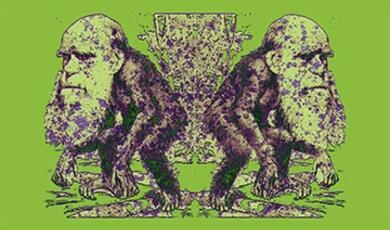
When Darwin finally published the On the Origin of Species, he tried to avoid controversy by ignoring human origins. Yet evolution was soon being attacked as the godless ‘monkey theory’.
The story of the deep, biogeophysical planetary connections and how these are intensifying the effects of climate change and economic development, is told through personal research and expeditions to remote locations across the world (including some that were previously unexplored).
Air pollution, the usefulness of trees, ideas for a green belt are not concerns we associate with the 1600s. But John Evelyn, writer, diarist and gardener, was unusual. His thinking in Fumifugium (1661) about air quality, and Sylva (1664) about trees, seems astonishingly close to our own today.