Gresham College provides outstanding educational talks and videos for the public free of charge. There are over 2,500 videos available on our website. Your support will help us to encourage people's love of learning for many years to come.
Sudden death in the young is more common than you think... This lecture considers the causes of sudden death, its impact on families, the difficulties of carrying out research, and some of the legal and social obstacles to discovering more.
The WHO suggests that the cost of contamination of the air within Europe alone amounts to $1.6 trillion, with massive implications for the health of both rich and poor people alike. How much do we know about this, and can anything realistically be done about it?
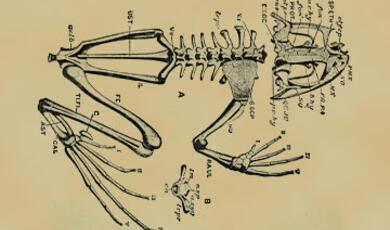
A discussion of the nature of consciousness founded in startling 1853 experiments on living, decapitated frogs. The debate brought in the greatest minds of the age and is still with us today.
Doctors’ careers can be built on publication rates and citations. Medical journals prefer positive results. It is not surprising that scientific fraud occurs, sometimes causing catastrophic damage to innocent patients and others. what can be done?
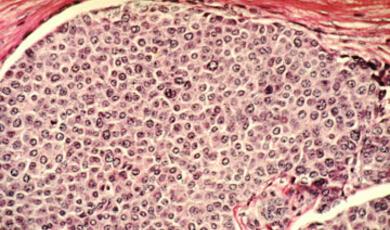
Different cancers offer differing hopes of prevention; from cervical or lung cancer (which are completely or largely preventable), to prostate cancer (for which there is no current strategy). What can be done, and what does the future hold?
Human-induced climate change is the greatest threat encountered by humanity. What is the latest evidence about what is happening to the global climate? What environment might our children face in 2100? What strategies might we use to make a difference?
Light, particularly sunlight, has always occupied a mystical power and is commonly held to bestow good health upon recipients of its rays. Both the truth and fallacy in this will be demonstrated with science of photo-medicine from a chemist’s point of view.

The treatment of cancer has been transformed in the last two decades, and great improvements are expected over the next twenty years. Better genetic understanding and harnessing of the immune system are among the approaches which will make the difference.
Examples of disease as shown in artworks will be examined, from the medical and surgical point of view as well as the historical and artistic ones, particularly visual loss as portrayed by artists from pre-historic times.