Gresham College provides outstanding educational talks and videos for the public free of charge. There are over 2,500 videos available on our website. Your support will help us to encourage people's love of learning for many years to come.
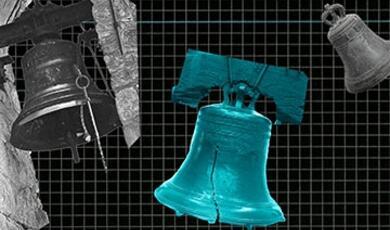
This lecture will look at change ringing, which is ringing a series of tuned bells (as you might find in the bell tower of a church) in a particular sequence, and this has exciting mathematical properties. We will also ask: why are bells bell-shaped?
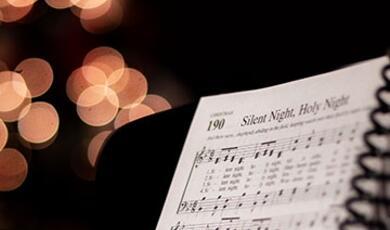
Boris Ord composed one tiny Christmas carol – ‘Adam lay ybounden’. But Ord’s largest contribution to the carol genre was his work as choirmaster at King’s College, Cambridge from 1929 to 1957.
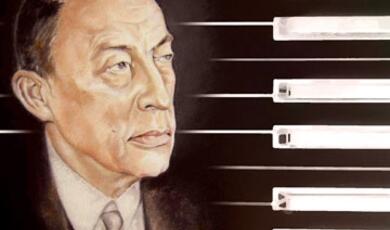
Rachmaninov is considered by many to be the greatest composer-pianist in history. But his very popularity has left the complexity and subtlety of his music underappreciated.
It has been known since antiquity that there are simple “harmonic” relationships between notes that sound appealing together. This lecture introduces the mathematics of pitch, scales, and just temperament. The pitch of a sound is not its only important property.
The story of the deep, biogeophysical planetary connections and how these are intensifying the effects of climate change and economic development, is told through personal research and expeditions to remote locations across the world (including some that were previously unexplored).
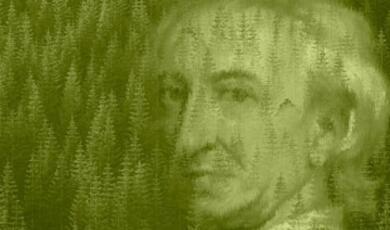
Air pollution, the usefulness of trees, ideas for a green belt are not concerns we associate with the 1600s. But John Evelyn, writer, diarist and gardener, was unusual. His thinking in Fumifugium (1661) about air quality, and Sylva (1664) about trees, seems astonishingly close to our own today.

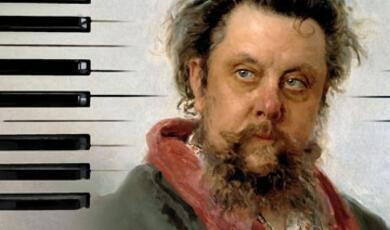
Musorgsky was a proficient, but not virtuosic pianist, and most of his piano music is comprised of unambitious salon pieces. On the basis of these modest exploits, no one could have predicted his Pictures at an Exhibition.