Gresham College provides outstanding educational talks and videos for the public free of charge. There are over 2,500 videos available on our website. Your support will help us to encourage people's love of learning for many years to come.
When England’s Reformation began, only a small band of idealists – or fanatics – truly wanted a Protestant England. Nevertheless, within a single lifetime, they achieved it.
There is a seismic shift underway in economics, hastened by the aftermath of the Covid-19 pandemic. Communities and countries around the world are beginning to adopt/consider adopting well-being and prosperity as major guiding principles.
The English Reformation – unlike many of the other Reformations convulsing sixteenth-century Europe – was at heart more about politics and law than about religion.
Most English people initially saw the Reformation as an unexpected catastrophe, wrenching their religious lives out of shape, and stripping their communities of resources they had naively believed belonged to them.
The story of the deep, biogeophysical planetary connections and how these are intensifying the effects of climate change and economic development, is told through personal research and expeditions to remote locations across the world (including some that were previously unexplored).
Air pollution, the usefulness of trees, ideas for a green belt are not concerns we associate with the 1600s. But John Evelyn, writer, diarist and gardener, was unusual. His thinking in Fumifugium (1661) about air quality, and Sylva (1664) about trees, seems astonishingly close to our own today.

England’s Catholic Reformation is the reformation that sixteenth-century England nearly had: a reformed and renewed English Catholic Church, its new schools and revived parishes matched with a firm smack of discipline.
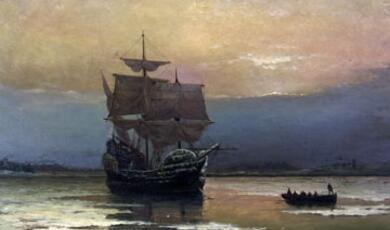
The story of the Mayflower is usually presented as a tale of persecuted Pilgrims crossing the Atlantic in circumstances of grave adversity to inhabit a desolate wilderness.