Gresham College provides outstanding educational talks and videos for the public free of charge. There are over 2,500 videos available on our website. Your support will help us to encourage people's love of learning for many years to come.
Philanthropy has long played a key role in our communities on local, national, and global scales. Yet if we have often assumed that giving is good, we must also step back and ask, “good for whom?” In short, how do we know when philanthropy does the public good?

What do we mean when we refer to the State of Israel as 'the Jewish State'? What does it mean for the politics of the state to be identified as 'Jewish'? And what does it mean for an academic and intellectual field to study Israel as a Jewish state?
The screening of witnesses for anonymity in the context of inquests and public inquiries is hugely contentious. Why does putting witnesses behind a screen cause such concern for human rights and civil liberties advocates? What are protective measures? Has there been an increase in such applications?
Cynicism, Stoicism and Epicureanism, emerged shortly after Platonism and Aristotelianism in Ancient Greece. Each of these new schools of philosophy offered a moral programme advocating the best way to live and a more abstract physical, scientific model of the workings of the universe.
What the NHS has provided and had to treat over its existence has changed much more radically than most people realise. Some of this change is rightly the domain of politics, but much is driven in response to changing health needs, improvements in medical science and priorities of society.
Has the time come for some form of political appointment of Supreme Court judges? Should there be parliamentary scrutiny of judicial appointments? This lecture contrasts the position of British and American Supreme Court judges.
Food-related conditions – cancer, heart disease, and strokes – are the leading causes of preventable deaths in the UK. Common wisdom is that health reflects personal choices and will power.
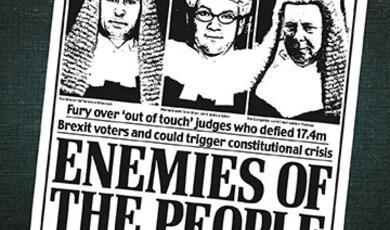
In the wake of the decision in the parliamentary prorogation case Miller (No.2), the question of the politics of the judiciary has been thrust into the public eye. Was it “a constitutional coup” as some have claimed?