Gresham College provides outstanding educational talks and videos for the public free of charge. There are over 2,500 videos available on our website. Your support will help us to encourage people's love of learning for many years to come.
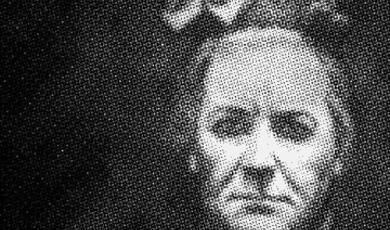
Amelia Dyer was one of the most prolific murderers in Victorian Britain. She made a living as a “baby farmer”, or someone paid to care for unwanted or abandoned infants – except she killed around 400 of them. How could a mother and nurse murder so many defenceless babies?
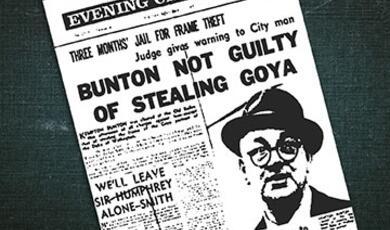
Is the jury system the bulwark of individual liberty? This lecture will look at the role of the so-called “perverse jury” in acquitting defendants where the law, or the charge itself, is deemed unjust.
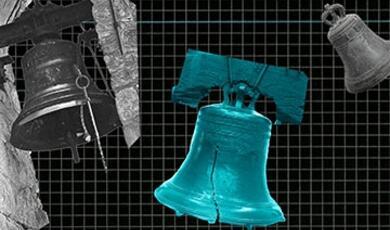
This lecture will look at change ringing, which is ringing a series of tuned bells (as you might find in the bell tower of a church) in a particular sequence, and this has exciting mathematical properties. We will also ask: why are bells bell-shaped?
How do we investigate violent and unexpected deaths at the inquest? Who investigates? When do deaths get referred to the Coroner? Are inquests non-adversarial and inquisitorial? When do you have a jury? What are findings, determinations and conclusions (aka verdicts)? Can you appeal?
It has been known since antiquity that there are simple “harmonic” relationships between notes that sound appealing together. This lecture introduces the mathematics of pitch, scales, and just temperament. The pitch of a sound is not its only important property.

This event, jointly hosted with the British Society for the History of Mathematics, will focus upon the relationship between mathematics and money, from coinage through to cryptocurrencies.
Algorithms, loosely translated, are systems for doing things. Algorithms are thus the link from pre-history to the modern world – without algorithms we would have an inanimate universe without all the mess and complexity of real life. It turns out that the history of algorithms is messy.
Traditionally a lawyer’s own views and political affiliation are irrelevant to the pursuit of the legal process. This lecture will examine – and celebrate – the work of lawyers who have crossed the usual lines and worked for political change.