Gresham College provides outstanding educational talks and videos for the public free of charge. There are over 2,500 videos available on our website. Your support will help us to encourage people's love of learning for many years to come.
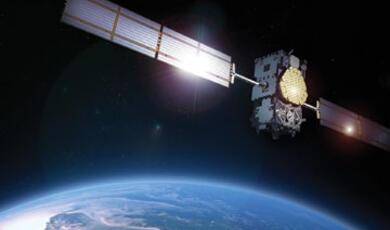
Space science is one of HM Government’s ‘eight great technologies’. In this lecture I will explain the mathematics behind satellites, showing how they are controlled, how they are sent to distant planets and how they transmit and receive data over vast distances.
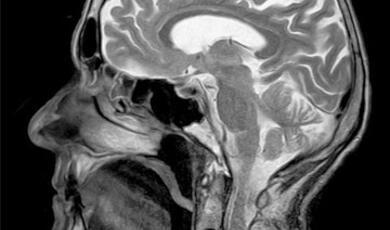
Many of us have been in a medical scanner and benefited from its use in medical diagnostics. But how many of us have considered how it works? The maths behind modern medical imaging (showing how CAT, MRI and Ultrasound scanners work) will be explained.
M.C. Escher’s work often used ingenious tilings of the plane with interlocking figures. We'll look at the mathematics of this diagram and how Escher used it. We’ll also see how Coxeter produced mathematical research based on aspects of Escher's work.
The mystery of an image of a levitating mathematician that won a first prize in a photo science competition in 2013 will be explained to show that such principles can be used beyond special effects.
Mathematics is vital in ensuring that the lights stay on as the planners of the grid need to solve non-linear differential-algebraic equations to work out how much electricity can be generated, distributed and stored. These challenges will increase in the future.
We all rely on materials: natural ones like wood and stone - or manufactured ones such as steel, glass and concrete. The mathematics needed to design and study such materials is rich and challenging.
What happens when power, communications, and transport are all disrupted, when shops cannot function, and when most people cannot find out what is happening? Storm Desmond in 2015 revealed how dependent on electricity modern city life has become. What lessons have been learnt?