Gresham College provides outstanding educational talks and videos for the public free of charge. There are over 2,500 videos available on our website. Your support will help us to encourage people's love of learning for many years to come.
Despite the controversy, evolution was widely accepted by many naturalists within a few years of the Origin’s appearance. An important reason for this rapid triumph was Darwin’s botanical works. Seen through evolutionary eyes, plants proved to be mobile, carnivorous, sensitive – even crafty.

When light is dispersed into its constituent colours, it can become possible to discern rich dynamical information about an evolving system in space, for example cosmic explosions, collisions or accelerations.
Niklaus Wirth said Algorithms + Data Structures = Programs. But programs are more than that. They are ubiquitous in modern life, but only a tiny minority of the population know how to program.
In 1930, the great physicist Wolfgang Pauli invented a new particle to save the principle of energy conservation in certain radioactive decays he was studying.
Humans use computers to do gigantic calculations which would be impossible to do by hand – for example, weather prediction. But could an AI go beyond that and come up with a proof of a theorem which has stumped humankind?
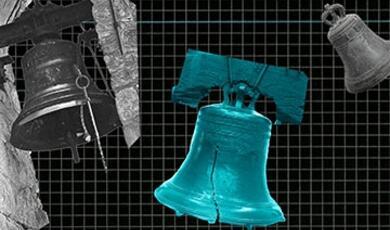
This lecture will look at change ringing, which is ringing a series of tuned bells (as you might find in the bell tower of a church) in a particular sequence, and this has exciting mathematical properties. We will also ask: why are bells bell-shaped?
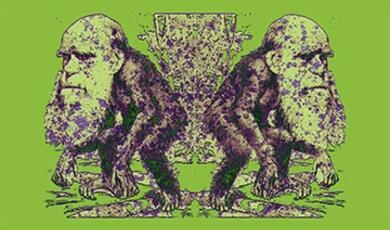
When Darwin finally published the On the Origin of Species, he tried to avoid controversy by ignoring human origins. Yet evolution was soon being attacked as the godless ‘monkey theory’.
Data structures are the critical ingredient of all good information systems. Poor data structures lead to horrendous problems of interoperability and nightmarish complexity; good ones can make the ‘uncomputable’ computable.