Gresham College provides outstanding educational talks and videos for the public free of charge. There are over 2,500 videos available on our website. Your support will help us to encourage people's love of learning for many years to come.
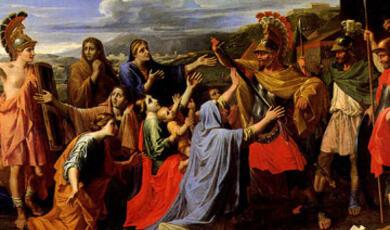
What do we mean by a hero and where does our understanding of the ‘heroic’ idiom come from? In this lecture, Jonathan Bate will show how Shakespeare’s idea of the hero was shaped by the classical tradition, going back to the ancient tale of Troy and Virgil’s epic poem The Aeneid.

What did the sky-watchers of the ancient world think about the night sky, and its implications for human existence? Moving on to the great discoveries of Copernicus, Kepler, and Galileo, we will consider the basic science and ask about the deeper significance of these discoveries.
We will carefully outline the categories of savings held by households and link that to the operation of financial intermediaries in providing loanable funds.
The US has a long history of populism, but no populist has won the nomination of a major party since William Jennings Bryan in 1896. In the past, populist insurgencies have heralded party realignment. Will the election of Trump do the same?
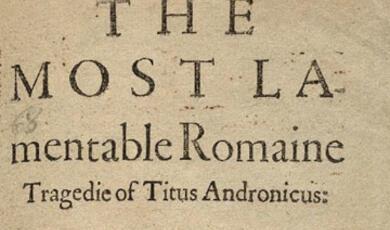
Jonathan Bate tells the story of how and why Shakespeare was steeped in the classics, from his earliest plays such as Titus Andronicus and The Comedy of Errors to his dramatisations of the stories of Julius Caesar and Antony and Cleopatra.
A dialogue with Philip Pullman's complex 'Dark Materials' trilogy which provides a framework for discussing how human beings relate to the material world, and the origin of evil.
South Africa’s Dutch Reformed Church (DRC) and the Afrikaner people it served had, since the 17th century drawn a distinction between white ‘Christians’ and the apparently unconvertible ‘heathen’ peoples around them. Theology legitimised apartheid, but was also instrumental in its end.
Can we give a purely scientific account of human nature in terms of its physical, chemical and biological components. Richard Dawnkins' 'The Selfish Gene' is considered to see how a scientific narrative about selfish genes might correlate with a theological narrative about sin.