Gresham College provides outstanding educational talks and videos for the public free of charge. There are over 2,500 videos available on our website. Your support will help us to encourage people's love of learning for many years to come.
When light is dispersed into its constituent colours, it can become possible to discern rich dynamical information about an evolving system in space, for example cosmic explosions, collisions or accelerations.
Niklaus Wirth said Algorithms + Data Structures = Programs. But programs are more than that. They are ubiquitous in modern life, but only a tiny minority of the population know how to program.
In 1930, the great physicist Wolfgang Pauli invented a new particle to save the principle of energy conservation in certain radioactive decays he was studying.
Humans use computers to do gigantic calculations which would be impossible to do by hand – for example, weather prediction. But could an AI go beyond that and come up with a proof of a theorem which has stumped humankind?
Over the last 30 years, digital technology produced an exponential increase in astronomical data. Within our lifetime, the entirety of the visible universe will have been mapped out: we will have seen everything there is to see. The question will then be: what does it all mean?
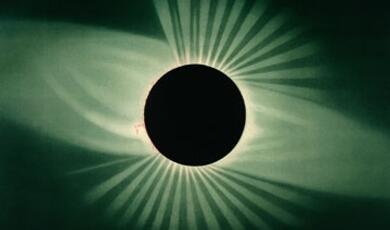
Accounts of occasional celestial spectacular events in past centuries have provided crucial information for modern-day astrophysicists. One such example is the so-called Great Eruption of Eta Carinae which was for a time in the mid 19th century the third brightest object in the night sky.
Drones are changing the face of war in the 21st century for combatants and civilians. Today drones carry out targeted assassinations, bombings and intelligence-gathering, and the forces that deploy them aim to minimise the loss of life.
Algorithms, loosely translated, are systems for doing things. Algorithms are thus the link from pre-history to the modern world – without algorithms we would have an inanimate universe without all the mess and complexity of real life. It turns out that the history of algorithms is messy.
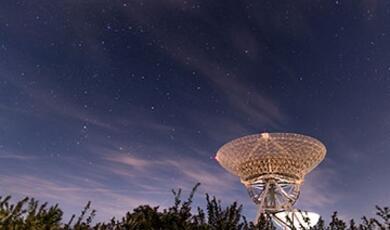
At longer wavelengths than the normal optical wavelengths to which human eyes are normally sensitive, is the radio part of the electromagnetic spectrum.
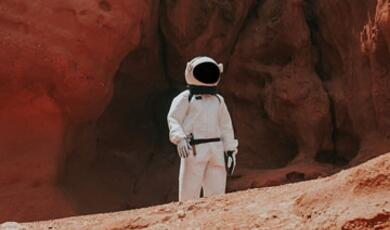
Mars has changed since it formed 4.6 billion years ago. When life started on Earth ~4 billion years ago, Mars was habitable too, with volcanism, a magnetic field, surface water and a thick atmosphere. Today, Mars is cold and dry, with a thin atmosphere and harsh surface.