Gresham College provides outstanding educational talks and videos for the public free of charge. There are over 2,500 videos available on our website. Your support will help us to encourage people's love of learning for many years to come.
This lecture reports on the findings of "The Independent Tribunal into Forced Organ Harvesting from Prisoners of Conscience in China" (June 2019), which examined reports of state-sponsored murder for the harvesting and sale of organs.
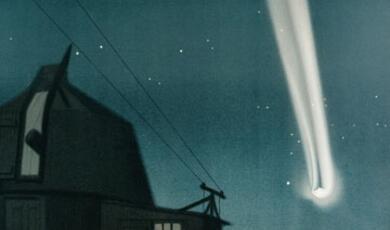
This talk will explain how the speed of light was first measured, and how an obscure but brilliant patent clerk in Bern, Switzerland by the name of Albert Einstein deduced that the speed of light is the upper speed limit for everything in the Universe.

This talk looks at mathematical modelling of real, complex fluids in flow situations – some with serious commercial applications, and some just for fun.
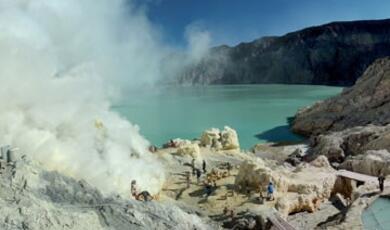
The volcanic processes that transport diamonds to the Earth’s surface and enrich copper beneath volcanoes, show how volcanoes can be a major energy and resource.
New approaches to volcanic hazard assessment and risk management are emerging as more information is required to respond to volcanic emergencies – illustrated by approaches to some recent eruptions, such as the Soufriere Hills Volcano, Montserrat.
To mark the 100th anniversary of his birth, the legacy of Nelson Mandela (1918-2013), first president of democratic South Africa, will be considered - both within his country and in the wider world.
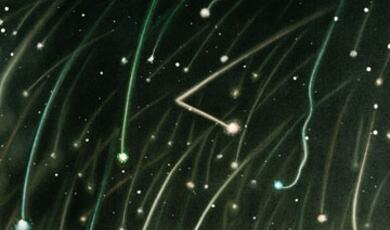
Matter consists of a mêlée of elementary particles. There are protons and neutrons, made up of quarks, and many other short-lived massive particles. One hope is to discover particles of dark matter, but this has so far eluded our best efforts.
Sir Geoffrey will be revisiting some of his key themes in the light of some changes that have taken place across the world since - and to offer his personal view.
In the UK and USA, counter-terrorism efforts have had disparate impacts on racial, ethnic or religious minorities. Are the underlying policies and practices consistent with Anglo-American concepts of the rule of law and individual rights?