Gresham College provides outstanding educational talks and videos for the public free of charge. There are over 2,500 videos available on our website. Your support will help us to encourage people's love of learning for many years to come.
This lecture addresses the potential links between AI and religious belief, which include the question of whether an artificial “superintelligence”, were one to arise, would be well-disposed towards us.
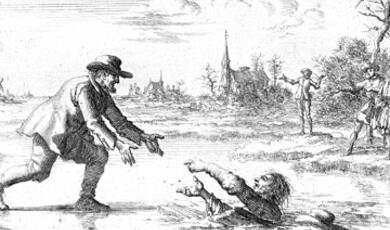
This final lecture will ask why it suits each age to select, reinvent and suppress different parts of the history of religious atrocity, and why some victims, such as Anabaptist radicals, remain neglected down to the present.
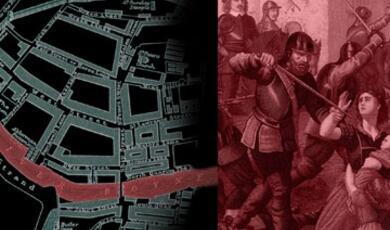
Nowhere in Europe have the wars of religion lasted longer than in Ireland. At the heart of this are two rival sets of memories of atrocities: above all, Protestants recall the massacres of the 1641 rebellion, and Catholics recall the massacres perpetrated by Oliver Cromwell in 1649.
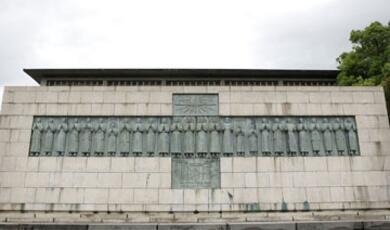
In the age of exploration, Catholic missionaries fanned out across the world, meeting with extraordinary success but also extraordinary opposition: nowhere more so than in Japan, where the fast-growing Catholic community was brutally suppressed in the early seventeenth century.

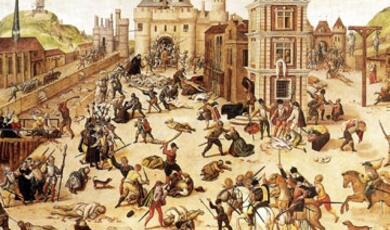
Europe’s Wars of Religion were fought against entire populations, and were punctuated by events remembered as atrocities: such as the siege of Leiden in 1573-4 or, most notoriously, the St Bartholomew’s Day Massacres in France in 1572.
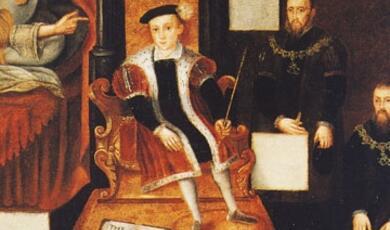
Medieval England was proudly Catholic and ostentatiously loyal to Rome. But from the late sixteenth century until recent times – and even now – anti-Catholic prejudice has been a cornerstone of English and British identity.
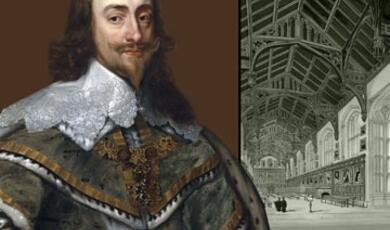
During the Civil War Charles I’s court, denied access to its usual country residences, was forced to set itself up in a series of makeshift locations. The most important of these was Oxford which Charles converted into a large and well-organised courtly campus.
This lecture will begin with Bacon’s imagined garden, then consider the long-term promise of the experimental or scientific garden, which would eventually lead to today’s biotechnologies.
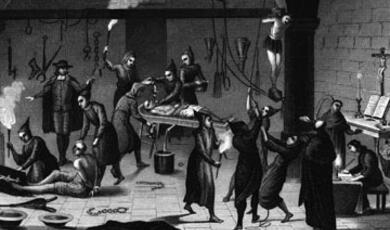
This lecture will survey this ‘black legend’ and ask what made it so enduring – and why some parts of the story, such as the Inquisition’s genocidal campaign against Spanish Jews, received so much less attention than others.
This series has argued that the origins of modern secularism lie in the age of the Renaissance. This last lecture will track that legacy down to the present.