Gresham College provides outstanding educational talks and videos for the public free of charge. There are over 2,500 videos available on our website. Your support will help us to encourage people's love of learning for many years to come.
Africans have been present in England for more than two thousand years, but we rarely see them or hear about them. And often their existence is dismissed as a figment of 'political correctness' or 'wokism.' This lecture will critically assess the myth of England's story as a 'sacred white space' and examine the evidence for diversity in medieval and early modern history. Africans are integral to English history and forgetting this diminishes Englishness, by preventing us from understanding ourselves.
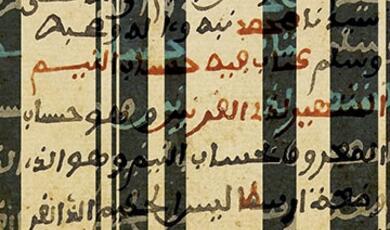
The Malian city of Timbuktu is one of the world's oldest seats of learning and has an intellectual legacy of hundreds of thousands of manuscripts, coming from three great West African desert empires. These manuscripts offer a unique window into their history. This lecture will look at how their study can be used to advance our knowledge of the intellectual history of the premodern world.
Clinical practice depends on the acquisition and analysis of evidence - detailed information from each patient’s clinical history, laboratory tests, imaging scans and biopsies. Yet data on its own is not enough, and must always be interpreted in the context of each unique person.
This lecture examines the centuries long presence of the African diaspora as an integral part of Britain’s history since Roman times. Unfortunately, this history is still too often ignored, its promotion limited only to October.
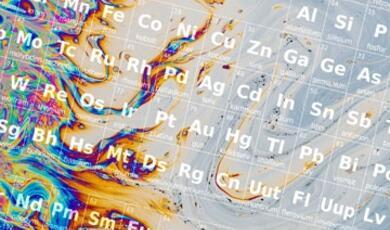
In this talk, Dr Wilkins will discuss the astrophysical origins of the chemical elements, almost all of which have an origin ranging from the big bang, to exploding white dwarfs, the collapse of massive stars, and the merger of ultra-compact objects, neutron stars.

The origin of life is one of the biggest questions in science, but until recently it was, experimentally, a question in chemistry. Now, gene sequences and a better understanding of cell growth under extreme conditions are giving insights from biology.
This talk shows that the incorporation of a simple salt can lead to a flexible plastic with mechanical properties similar to oil derived plastics. Most importantly these plastics are recyclable and ultimately compostable.