Gresham College provides outstanding educational talks and videos for the public free of charge. There are over 2,500 videos available on our website. Your support will help us to encourage people's love of learning for many years to come.
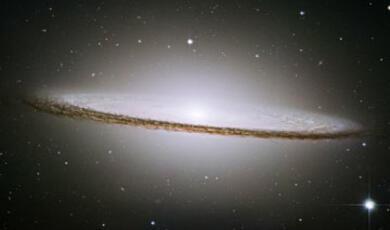
What are the implications of the Big Bang for our understanding of ourselves? Is the universe meaningless? or is there some way of developing a ‘big picture’ of reality that helps us decide our place and purpose in the universe.
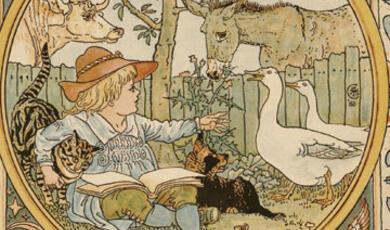
The lecture asks how the ancient fables address power relations in a slave society. Were they primarily stories for and by slaves, or did they serve ruling-class interests?
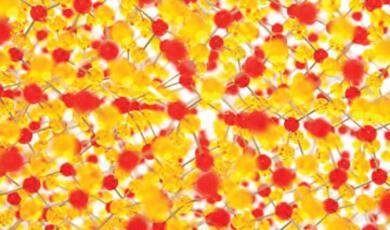
Matter consists of a mêlée of elementary particles. There are protons and neutrons, made up of quarks, and many other short-lived massive particles. One hope is to discover particles of dark matter, but this has so far eluded our best efforts.
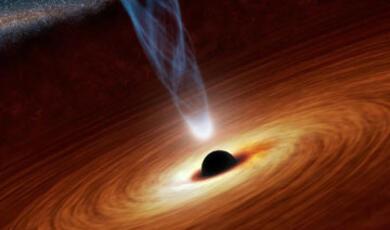
View the sky through an x-ray telescope and the conception of the universe changes dramatically. Black holes are best seen in x-rays, because impinging gas collides with the black hole at near light speed, resulting in intense x-ray and gamma ray emission.
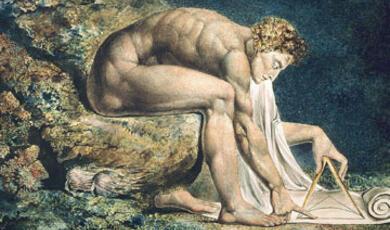
Isaac Newton saw his demonstration of the regularity of the universe as having great religious significance. Newton’s ideas were initially seen as very supportive of religion; yet within 50 years, they were being seen in a very different light.
This lecture uncovers what we know about the ‘real Sappho’, an aristocrat who lived between 630 and 570 BCE on the island of Lesbos and socialised in the lavish courts of upstart tyrants.
Theories of the multiverse suggest that life-containing universes are incredibly rare. We live in one of these, whether by cosmological natural selection or by the consequences of a theory yet to be formulated.
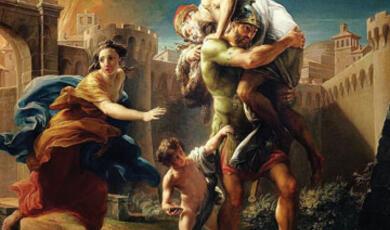
Homer’s Iliad, the earliest Greek poem, narrates the archetypal war between ‘Europeans’ and ‘Asiatics’ divided by the Hellespont. Looking at Wolfgang Peterson’s blockbuster Troy (2004), the lecture describes the genesis of the Iliad between the Mycenaean Late Bronze Age and the 8th centu
What did the sky-watchers of the ancient world think about the night sky, and its implications for human existence? Moving on to the great discoveries of Copernicus, Kepler, and Galileo, we will consider the basic science and ask about the deeper significance of these discoveries.
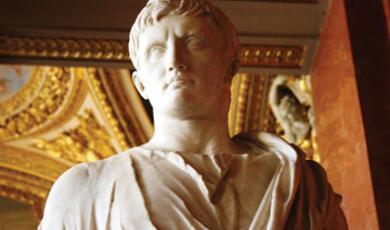
Mary Beard, Professor of Classics at the Univeristy of Cambridge, Fellow of Newnham College, and Royal Academy of Arts Professor of Ancient Literature - who is also well-known for her media appearances - will speak on the fascinating topic of images of Roman Emperors.