Gresham College provides outstanding educational talks and videos for the public free of charge. There are over 2,500 videos available on our website. Your support will help us to encourage people's love of learning for many years to come.
We shall investigate the implications for the future of international conflict and of national defence. If preparations for the next war have already started, can we tell who is winning?
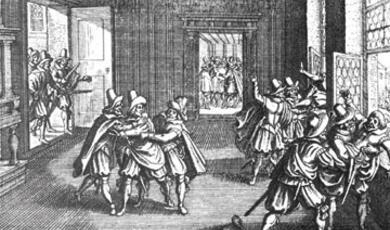
Professor Wilson will examine the causes, conduct and consequences of the Thirty Years’ War, Europe’s most destructive conflict prior to the two 20th-century world wars.
After Stalin’s death in 1953, successive leaders tried to find ways to revitalise the Soviet regime and rethink its promises to the Soviet people. Life within a system no longer based on terror and intense industrial transformation offered citizens strange alternatives.
The lecture asks how the ancient fables address power relations in a slave society. Were they primarily stories for and by slaves, or did they serve ruling-class interests?
This lecture uncovers what we know about the ‘real Sappho’, an aristocrat who lived between 630 and 570 BCE on the island of Lesbos and socialised in the lavish courts of upstart tyrants.
Homer’s Iliad, the earliest Greek poem, narrates the archetypal war between ‘Europeans’ and ‘Asiatics’ divided by the Hellespont. Looking at Wolfgang Peterson’s blockbuster Troy (2004), the lecture describes the genesis of the Iliad between the Mycenaean Late Bronze Age and the 8th centu
The lecture will explore what we know (and don’t know) about sexual violence from a global perspective. How have people in different periods of history and in a variety of countries understood and responded to assaults?
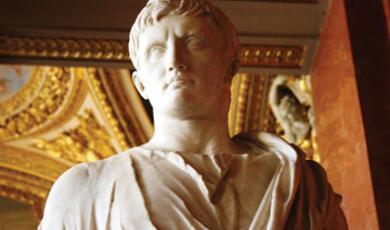
Mary Beard, Professor of Classics at the Univeristy of Cambridge, Fellow of Newnham College, and Royal Academy of Arts Professor of Ancient Literature - who is also well-known for her media appearances - will speak on the fascinating topic of images of Roman Emperors.

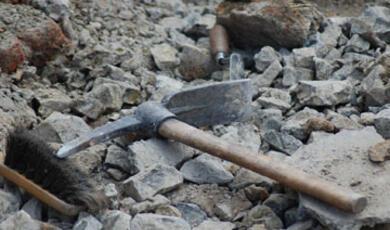
Excavations have recently uncovered much evidence of Roman London, including fragments of 405 waxed stylus writing-tablets that can be dated to AD 50-90. Roger Tomlin explains how he deciphered the tablets and what can be learned from them.