Gresham College provides outstanding educational talks and videos for the public free of charge. There are over 2,500 videos available on our website. Your support will help us to encourage people's love of learning for many years to come.
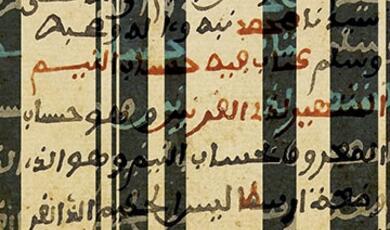
The Malian city of Timbuktu is one of the world's oldest seats of learning and has an intellectual legacy of hundreds of thousands of manuscripts, coming from three great West African desert empires. These manuscripts offer a unique window into their history. This lecture will look at how their study can be used to advance our knowledge of the intellectual history of the premodern world.
Film historian Ian Christie explores the life and art of Powell & Pressburger, revealing his own personal memories of the filmmakers alongside rare archive materials.
Cynicism, Stoicism and Epicureanism, emerged shortly after Platonism and Aristotelianism in Ancient Greece. Each of these new schools of philosophy offered a moral programme advocating the best way to live and a more abstract physical, scientific model of the workings of the universe.

Cinema’s original canons were based on a small number of works most highly esteemed by archivists and historians. But access to the history of film has been dramatically expanded by digital media, as have debates between those arguing from different premises.
Plato’s most brilliant student and perhaps the most significant intellectual in world history, Aristotle built on Plato’s doctrines but also radically disagreed with them.
Canons of taste and value in other media, such as literature, art and music, have been challenged in recent decades by proponents of sexual and ethnic equality.
For nearly seventy years, what might be called ‘the canon’ of greatest films has been arbitrated by an international poll of critics delivering a ‘ten best’ list every decade, published in the BFI’s Sight & Sound.
China’s media provide a window into the Chinese mind, as the country asserts itself in the world as a great power. What do Chinese people think is the purpose of life? What matters most to them? In what do they believe? How do officials and journalists explain their responsibilities?
Plato the Athenian was the philosopher who founded the Academy and whose brilliant writings are the foundation texts of the entire western philosophical tradition.