Gresham College provides outstanding educational talks and videos for the public free of charge. There are over 2,500 videos available on our website. Your support will help us to encourage people's love of learning for many years to come.
Cynicism, Stoicism and Epicureanism, emerged shortly after Platonism and Aristotelianism in Ancient Greece. Each of these new schools of philosophy offered a moral programme advocating the best way to live and a more abstract physical, scientific model of the workings of the universe.
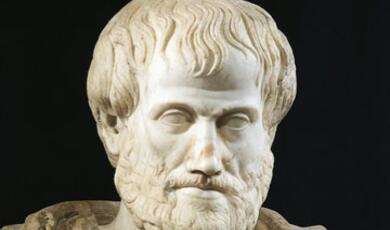
Plato’s most brilliant student and perhaps the most significant intellectual in world history, Aristotle built on Plato’s doctrines but also radically disagreed with them.
Plato the Athenian was the philosopher who founded the Academy and whose brilliant writings are the foundation texts of the entire western philosophical tradition.
The birth of rational medicine contributed to the scientific revolution which occurred amongst eastern Greek communities in the 7th-to-5th centuries BCE.
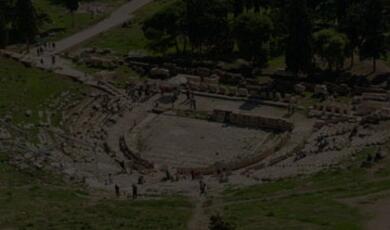
This lecture looks at the archaeological site of the Lyceum, discovered accidentally in 1996, and asks how the remains can illuminate Aristotle’s life, work, and incomparable contribution across academic disciplines, from Political Theory and Aesthetics to Zoology, Physics and Astronomy.

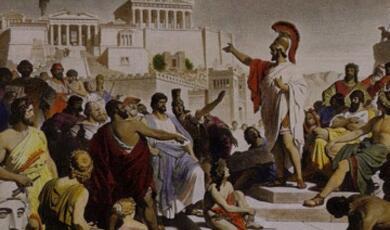
In 431 BCE the Athenian statesman Pericles delivered one of the most influential speeches of all time, his Epitaphios or Funeral Oration. The occasion was at the funeral of the first Athenian soldiers to lose their lives in the Peloponnesian War.