Gresham College provides outstanding educational talks and videos for the public free of charge. There are over 2,500 videos available on our website. Your support will help us to encourage people's love of learning for many years to come.
Mathematics has been used as a tool to understand and control infectious disease for over a century, but Covid-19 brought along a whole epidemic of new challenges.
Cynicism, Stoicism and Epicureanism, emerged shortly after Platonism and Aristotelianism in Ancient Greece. Each of these new schools of philosophy offered a moral programme advocating the best way to live and a more abstract physical, scientific model of the workings of the universe.

It is now easier to breach the security of people’s personal and business lives than perhaps at any time in recent human history. Technology has brought unimaginable speed, scale and reach to hackers.
Could AI replace stand-up comedians and scriptwriters? This may not be an impossible dream if you accept that nothing we do is forever beyond the scope of computer modelling.
This talk relates true stories of life-changing events in which the use (or abuse) of mathematics has played a critical role. You will meet innocent victims of miscarriages of justice and the unwitting victims of mathematical bugs.
Where do we get our mathematical symbols from? Why is the set of integers called ℤ ? When was the equals sign first used? How about zero? Good notation tends to catch on quickly, whereas bad notation can obscure beautiful theory.
Even the most humdrum of electrical devices nowadays contains at least one computer; yet surprisingly few people are aware of their history, their form or function. In this talk we will see that not only is the history of computers rich and diverse, their architecture likewise.
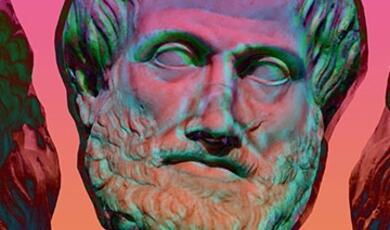
Plato’s most brilliant student and perhaps the most significant intellectual in world history, Aristotle built on Plato’s doctrines but also radically disagreed with them.