Gresham College provides outstanding educational talks and videos for the public free of charge. There are over 2,500 videos available on our website. Your support will help us to encourage people's love of learning for many years to come.
This lecture looks at our changing understanding of ourselves, focussing on Charles Darwin’s theory of human origins and the religious, scientific and ethical questions raised.
The Labour Party was formed in 1900 as a coalition between trade unions and socialist intellectuals with the aim of securing representation for the working class in parliament.
Housing represents the main asset class held by UK households and we shall try to understand why it is held as such a large share of assets. We shall then outline whether this choice has other knock on effects in the economy such as labour and social mobility.
This lecture uncovers what we know about the ‘real Sappho’, an aristocrat who lived between 630 and 570 BCE on the island of Lesbos and socialised in the lavish courts of upstart tyrants.
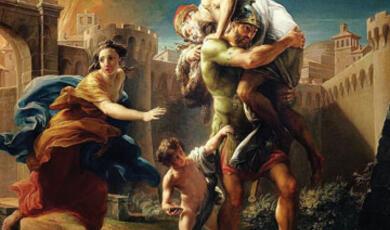
Homer’s Iliad, the earliest Greek poem, narrates the archetypal war between ‘Europeans’ and ‘Asiatics’ divided by the Hellespont. Looking at Wolfgang Peterson’s blockbuster Troy (2004), the lecture describes the genesis of the Iliad between the Mycenaean Late Bronze Age and the 8th centu
What did the sky-watchers of the ancient world think about the night sky, and its implications for human existence? Moving on to the great discoveries of Copernicus, Kepler, and Galileo, we will consider the basic science and ask about the deeper significance of these discoveries.
We will carefully outline the categories of savings held by households and link that to the operation of financial intermediaries in providing loanable funds.
The US has a long history of populism, but no populist has won the nomination of a major party since William Jennings Bryan in 1896. In the past, populist insurgencies have heralded party realignment. Will the election of Trump do the same?
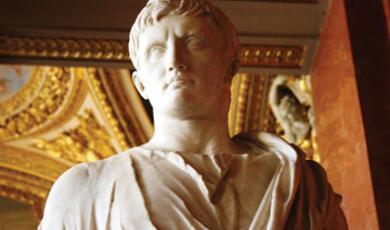
Mary Beard, Professor of Classics at the Univeristy of Cambridge, Fellow of Newnham College, and Royal Academy of Arts Professor of Ancient Literature - who is also well-known for her media appearances - will speak on the fascinating topic of images of Roman Emperors.

Excavations have recently uncovered much evidence of Roman London, including fragments of 405 waxed stylus writing-tablets that can be dated to AD 50-90. Roger Tomlin explains how he deciphered the tablets and what can be learned from them.