Gresham College provides outstanding educational talks and videos for the public free of charge. There are over 2,500 videos available on our website. Your support will help us to encourage people's love of learning for many years to come.
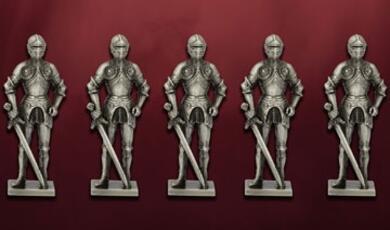
Were the Crusades an early example of European colonialism? What value did the crusading frontier hold for the knights who fought to defend it? What was the relationship between the Crusades and the knightly culture of chivalry?
Cyberwar is not waged on physical battlefields following rules of engagement. Aggressors worry less about collateral damage, in part because they aren’t forced to confront the sight of an enemy bleeding to death before their eyes.
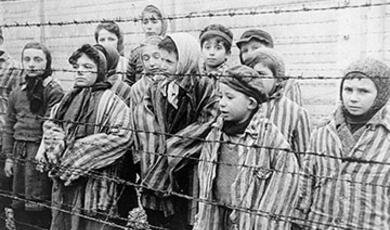
The 2020 Alfred Wiener Holocaust Memorial Lecture Series - 2020 marks the 75th anniversary of the liberation of Auschwitz, the most lethal of all Nazi camps.
Drones are changing the face of war in the 21st century for combatants and civilians. Today drones carry out targeted assassinations, bombings and intelligence-gathering, and the forces that deploy them aim to minimise the loss of life.
What is meant by ‘love’ between human and nonhuman animals? Why is sex with animals such a taboo? It is only in very recent years that some people have begun to undermine the absolute prohibition on zoosexuality. Are their arguments dangerous, perverted, or simply wrongheaded?
Following the Beagle voyage, Darwin settled down to a quiet married life, relying on correspondence to gather facts. He wrote thousands of letters as he gathered facts to support his still-secret theory.
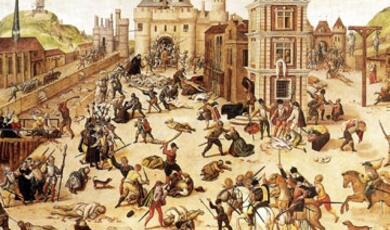
Europe’s Wars of Religion were fought against entire populations, and were punctuated by events remembered as atrocities: such as the siege of Leiden in 1573-4 or, most notoriously, the St Bartholomew’s Day Massacres in France in 1572.
The lecture will show how Prohibition animated combatants on both sides, generating two Americas that were barely comprehensible to each other, and how the truce declared during depression and war would not last.
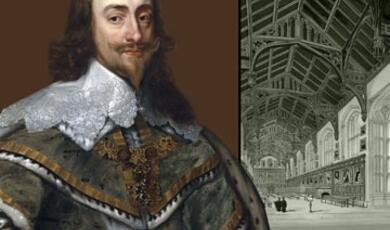
During the Civil War Charles I’s court, denied access to its usual country residences, was forced to set itself up in a series of makeshift locations. The most important of these was Oxford which Charles converted into a large and well-organised courtly campus.