Gresham College provides outstanding educational talks and videos for the public free of charge. There are over 2,500 videos available on our website. Your support will help us to encourage people's love of learning for many years to come.
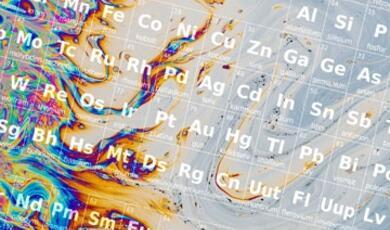
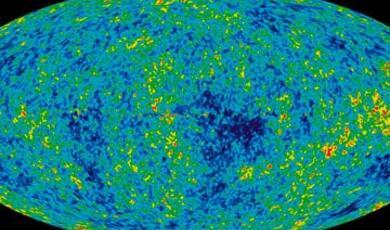
In this talk, Dr Wilkins will discuss the astrophysical origins of the chemical elements, almost all of which have an origin ranging from the big bang, to exploding white dwarfs, the collapse of massive stars, and the merger of ultra-compact objects, neutron stars.
This talk will review the dramatic consequences on what we observe in the night sky that arise purely from the consequences of light-travel time effects.
This talk will explain how the speed of light was first measured, and how an obscure but brilliant patent clerk in Bern, Switzerland by the name of Albert Einstein deduced that the speed of light is the upper speed limit for everything in the Universe.
This lecture looks at the archaeological site of the Lyceum, discovered accidentally in 1996, and asks how the remains can illuminate Aristotle’s life, work, and incomparable contribution across academic disciplines, from Political Theory and Aesthetics to Zoology, Physics and Astronomy.

This talk looks at mathematical modelling of real, complex fluids in flow situations – some with serious commercial applications, and some just for fun.
Matter consists of a mêlée of elementary particles. There are protons and neutrons, made up of quarks, and many other short-lived massive particles. One hope is to discover particles of dark matter, but this has so far eluded our best efforts.
Excavations have recently uncovered much evidence of Roman London, including fragments of 405 waxed stylus writing-tablets that can be dated to AD 50-90. Roger Tomlin explains how he deciphered the tablets and what can be learned from them.
Roman London was founded on the banks of the Thames to take advantage of the tidal river for traffic trade and communications. But precisely where were the bridge and the harbour, and what did they look like?
What happens when power, communications, and transport are all disrupted, when shops cannot function, and when most people cannot find out what is happening? Storm Desmond in 2015 revealed how dependent on electricity modern city life has become. What lessons have been learnt?