Gresham College provides outstanding educational talks and videos for the public free of charge. There are over 2,500 videos available on our website. Your support will help us to encourage people's love of learning for many years to come.
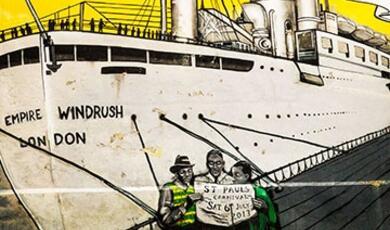
London in the 1950s and 60s was a crucible in which West Indian writers, artists, thinkers and scholars imagined new futures for the Caribbean, Britain and the world.
Traditionally a lawyer’s own views and political affiliation are irrelevant to the pursuit of the legal process. This lecture will examine – and celebrate – the work of lawyers who have crossed the usual lines and worked for political change.
From The Merchant of Venice to The Taming of the Shrew, it’s easy to see how Shakespeare’s plays can cause offence to contemporary audiences. Is it harder to teach Shakespeare today than in the past? Have ideas about what is offensive in Shakespeare changed over time?
Lord Carlile will discuss the effect of Covid-19 on counter terrorism policy, including suggestions that terrorist organisations have taken advantage of the pandemic to increase their influence.
What is the history of populism? Has it ever been a force for good? In this lecture, Sir Richard Evans, Provost of Gresham College, discusses the different varieties of populism.
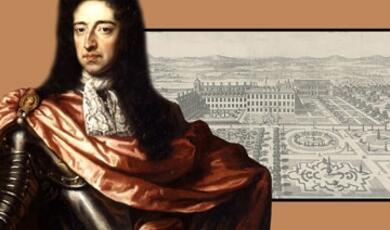
Like James I, King William III was fundamentally unhappy with the stuffy formality of England’s vast crumbling royal estate. But unlike James, who virtually abandoned Edinburgh, William maintained a second court, and a parallel suite of royal houses, in the Netherlands.
For a decade after the execution of Charles I the Stuart courts were based in the Low Countries and France. Always short of money, but determined to maintain splendour and dignity, Charles II rented a series of mansions and used them as the headquarters of the exiled monarchy.
Mathematics and art are more similar than is commonly thought. Each is concerned with the process of being highly creative with abstract objects and of producing everlasting work of great aesthetic beauty.