Gresham College provides outstanding educational talks and videos for the public free of charge. There are over 2,500 videos available on our website. Your support will help us to encourage people's love of learning for many years to come.
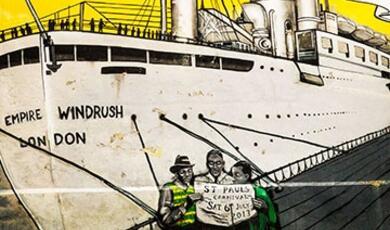
London in the 1950s and 60s was a crucible in which West Indian writers, artists, thinkers and scholars imagined new futures for the Caribbean, Britain and the world.
England’s Catholic Reformation is the reformation that sixteenth-century England nearly had: a reformed and renewed English Catholic Church, its new schools and revived parishes matched with a firm smack of discipline.
From The Merchant of Venice to The Taming of the Shrew, it’s easy to see how Shakespeare’s plays can cause offence to contemporary audiences. Is it harder to teach Shakespeare today than in the past? Have ideas about what is offensive in Shakespeare changed over time?
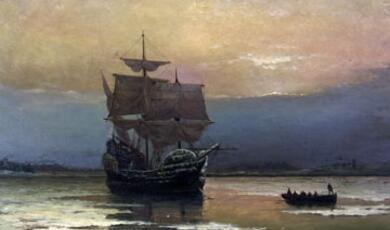
The story of the Mayflower is usually presented as a tale of persecuted Pilgrims crossing the Atlantic in circumstances of grave adversity to inhabit a desolate wilderness.
This lecture addresses the potential links between AI and religious belief, which include the question of whether an artificial “superintelligence”, were one to arise, would be well-disposed towards us.
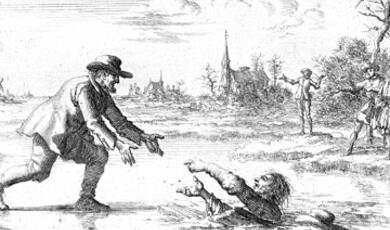
This final lecture will ask why it suits each age to select, reinvent and suppress different parts of the history of religious atrocity, and why some victims, such as Anabaptist radicals, remain neglected down to the present.
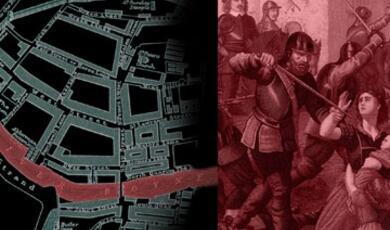
Nowhere in Europe have the wars of religion lasted longer than in Ireland. At the heart of this are two rival sets of memories of atrocities: above all, Protestants recall the massacres of the 1641 rebellion, and Catholics recall the massacres perpetrated by Oliver Cromwell in 1649.
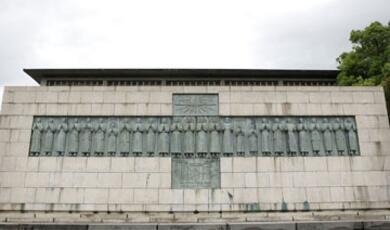
In the age of exploration, Catholic missionaries fanned out across the world, meeting with extraordinary success but also extraordinary opposition: nowhere more so than in Japan, where the fast-growing Catholic community was brutally suppressed in the early seventeenth century.

Mathematics and art are more similar than is commonly thought. Each is concerned with the process of being highly creative with abstract objects and of producing everlasting work of great aesthetic beauty.