Gresham College provides outstanding educational talks and videos for the public free of charge. There are over 2,500 videos available on our website. Your support will help us to encourage people's love of learning for many years to come.
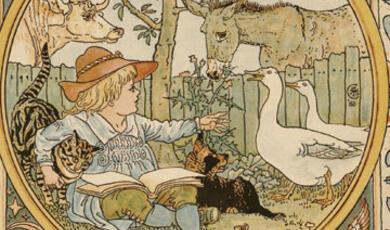
The lecture asks how the ancient fables address power relations in a slave society. Were they primarily stories for and by slaves, or did they serve ruling-class interests?
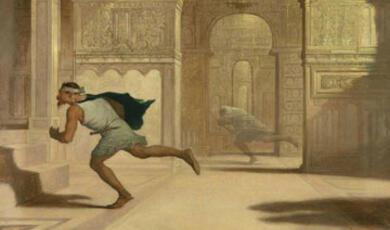
Starting with literary examples from Dickens, this lecture will untangle the complexity of shadow-meaning by exploring how artists have used shadows since ancient times.
Matter consists of a mêlée of elementary particles. There are protons and neutrons, made up of quarks, and many other short-lived massive particles. One hope is to discover particles of dark matter, but this has so far eluded our best efforts.
It is well known that Shakespeare lived in an age of monarchy and wrote powerfully in his English history plays about the duties of the sovereign. In this lecture, Jonathan Bate will tell another, forgotten story: of how Shakespeare was also fascinated by Roman political models.

Stereoscopic photography rapidly became a worldwide craze after the Great Exhibition of 1851. Cheap viewers and mass-produced stereographs brought startlingly vivid images within reach of a mass audience, making this the form in which most people first encountered photography.
View the sky through an x-ray telescope and the conception of the universe changes dramatically. Black holes are best seen in x-rays, because impinging gas collides with the black hole at near light speed, resulting in intense x-ray and gamma ray emission.
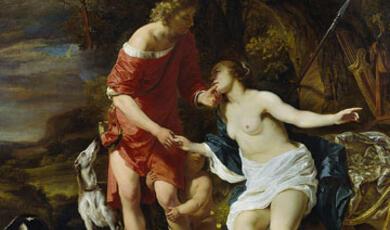
The Rape of Lucrece set the mould for Shakespeare’s exploration of the tragic consequences of sexual desire turning to violence. Jonathan Bate will show how Shakespeare developed these themes from his reading of the great Roman poet Ovid.
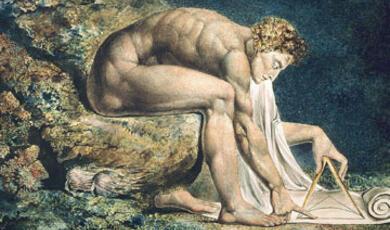
Isaac Newton saw his demonstration of the regularity of the universe as having great religious significance. Newton’s ideas were initially seen as very supportive of religion; yet within 50 years, they were being seen in a very different light.
Catherine Roach uncovers what we learn from the romance story about today’s changing norms for gender and sexuality and about the nature of happiness and love.
Theories of the multiverse suggest that life-containing universes are incredibly rare. We live in one of these, whether by cosmological natural selection or by the consequences of a theory yet to be formulated.