Gresham College provides outstanding educational talks and videos for the public free of charge. There are over 2,500 videos available on our website. Your support will help us to encourage people's love of learning for many years to come.
Well-trained eyes can be remarkably useful for capturing light curves of evolving objects in the cosmos, even contributing to modern research programmes.
The relative role of the State and the individual is a recurring theme of political theory. It is also a practical question in public health – what are the respective responsibilities of government, individuals and healthcare professionals to protect health?
Clinical practice is often seen as the acquisition and application of scientific knowledge to diagnose and treat diseases. Yet every patient is different.
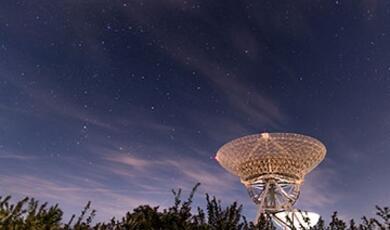
At longer wavelengths than the normal optical wavelengths to which human eyes are normally sensitive, is the radio part of the electromagnetic spectrum.
We all need experts for things we can’t do ourselves. And we are all on a path to becoming expert ourselves, whatever our areas of interest. But what does it mean to be expert? In his new book Expert: Understanding the Path to Mastery (Viking Penguin, 2020), Roger Kneebone explores these challenge
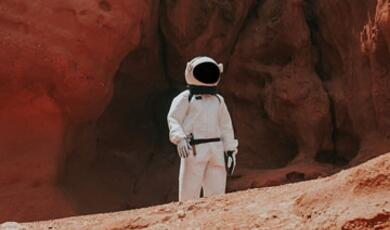
Mars has changed since it formed 4.6 billion years ago. When life started on Earth ~4 billion years ago, Mars was habitable too, with volcanism, a magnetic field, surface water and a thick atmosphere. Today, Mars is cold and dry, with a thin atmosphere and harsh surface.

What are the opportunities for using Information Technology to reduce the cost of healthcare? And what might our healthcare system look like in 10 years time if we make judicious investments in technology?
The birth of rational medicine contributed to the scientific revolution which occurred amongst eastern Greek communities in the 7th-to-5th centuries BCE.
This talk will consider how expectation plays a role in discovery and in scientific advance, and considers the challenges involved in assessing changes taking place on our own planet.
In this lecture, I look at what people from the late eighteenth century to the present thought they knew about toes, arches, heels, and ankles. What makes a beautiful foot? How have ideas of foot-beauty changed over time?