Gresham College provides outstanding educational talks and videos for the public free of charge. There are over 2,500 videos available on our website. Your support will help us to encourage people's love of learning for many years to come.
Space today is terrifyingly silent. But it wasn’t always thus: the early universe was filled with a hot plasma in which sound waves could travel. The cosmos was quivering with the aftershocks of the Big Bang.
Highly energetic particles from outer space travelling at the speed of light, known as cosmic rays, originate from the sites of extreme particle acceleration in the Universe.
When light is dispersed into its constituent colours, it can become possible to discern rich dynamical information about an evolving system in space, for example cosmic explosions, collisions or accelerations.
In 1930, the great physicist Wolfgang Pauli invented a new particle to save the principle of energy conservation in certain radioactive decays he was studying.
Over the last 30 years, digital technology produced an exponential increase in astronomical data. Within our lifetime, the entirety of the visible universe will have been mapped out: we will have seen everything there is to see. The question will then be: what does it all mean?
Accounts of occasional celestial spectacular events in past centuries have provided crucial information for modern-day astrophysicists. One such example is the so-called Great Eruption of Eta Carinae which was for a time in the mid 19th century the third brightest object in the night sky.
What is meant by ‘love’ between human and nonhuman animals? Why is sex with animals such a taboo? It is only in very recent years that some people have begun to undermine the absolute prohibition on zoosexuality. Are their arguments dangerous, perverted, or simply wrongheaded?
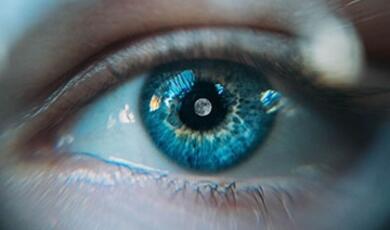
Well-trained eyes can be remarkably useful for capturing light curves of evolving objects in the cosmos, even contributing to modern research programmes.
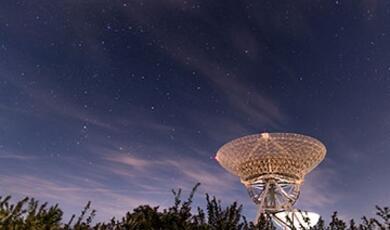
At longer wavelengths than the normal optical wavelengths to which human eyes are normally sensitive, is the radio part of the electromagnetic spectrum.
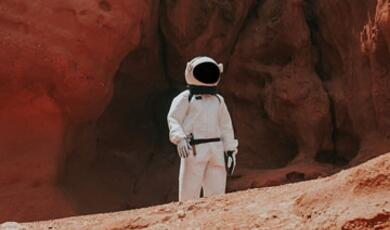
Mars has changed since it formed 4.6 billion years ago. When life started on Earth ~4 billion years ago, Mars was habitable too, with volcanism, a magnetic field, surface water and a thick atmosphere. Today, Mars is cold and dry, with a thin atmosphere and harsh surface.