Gresham College provides outstanding educational talks and videos for the public free of charge. There are over 2,500 videos available on our website. Your support will help us to encourage people's love of learning for many years to come.
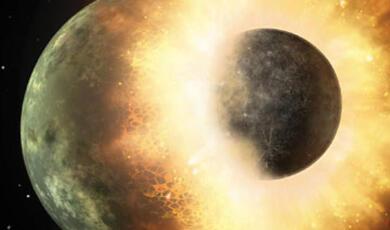
Asteroid impact could devastate the Earth, although preventive measures might detect and monitor orbits of potential killer asteroids. Longer term, the sun will evolve into a red giant and expand to a hundred times the orbit of the earth.
What are the implications of the Big Bang for our understanding of ourselves? Is the universe meaningless? or is there some way of developing a ‘big picture’ of reality that helps us decide our place and purpose in the universe.
Matter consists of a mêlée of elementary particles. There are protons and neutrons, made up of quarks, and many other short-lived massive particles. One hope is to discover particles of dark matter, but this has so far eluded our best efforts.
It is well known that Shakespeare lived in an age of monarchy and wrote powerfully in his English history plays about the duties of the sovereign. In this lecture, Jonathan Bate will tell another, forgotten story: of how Shakespeare was also fascinated by Roman political models.

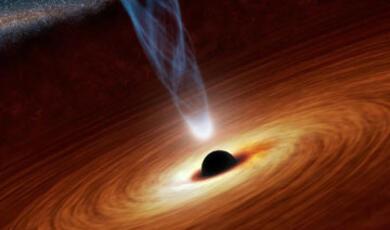
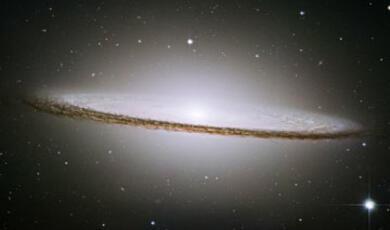
View the sky through an x-ray telescope and the conception of the universe changes dramatically. Black holes are best seen in x-rays, because impinging gas collides with the black hole at near light speed, resulting in intense x-ray and gamma ray emission.
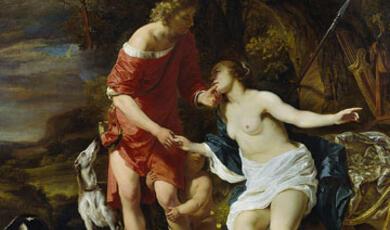
The Rape of Lucrece set the mould for Shakespeare’s exploration of the tragic consequences of sexual desire turning to violence. Jonathan Bate will show how Shakespeare developed these themes from his reading of the great Roman poet Ovid.
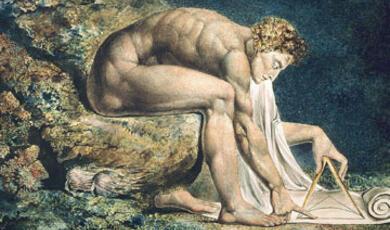
Isaac Newton saw his demonstration of the regularity of the universe as having great religious significance. Newton’s ideas were initially seen as very supportive of religion; yet within 50 years, they were being seen in a very different light.
Theories of the multiverse suggest that life-containing universes are incredibly rare. We live in one of these, whether by cosmological natural selection or by the consequences of a theory yet to be formulated.
What did the sky-watchers of the ancient world think about the night sky, and its implications for human existence? Moving on to the great discoveries of Copernicus, Kepler, and Galileo, we will consider the basic science and ask about the deeper significance of these discoveries.