Gresham College provides outstanding educational talks and videos for the public free of charge. There are over 2,500 videos available on our website. Your support will help us to encourage people's love of learning for many years to come.
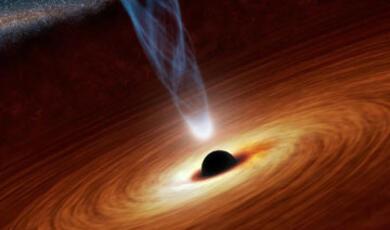
Professor Silk will describe the state of our knowledge of neutron stars and black holes, and how new observations of gravity waves are poised to revolutionise this field.
The establishment of the People’s Republic of China in 1949 gave Chinese artists a government that had explicit policies for the arts, seeing them as an essential part of the creation of ‘new China’.
Asteroid impact could devastate the Earth, although preventive measures might detect and monitor orbits of potential killer asteroids. Longer term, the sun will evolve into a red giant and expand to a hundred times the orbit of the earth.
What are the implications of the Big Bang for our understanding of ourselves? Is the universe meaningless? or is there some way of developing a ‘big picture’ of reality that helps us decide our place and purpose in the universe.
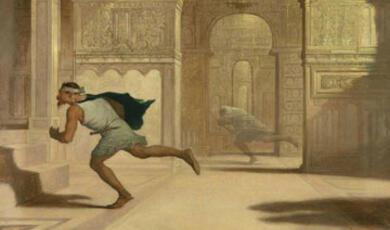
Starting with literary examples from Dickens, this lecture will untangle the complexity of shadow-meaning by exploring how artists have used shadows since ancient times.
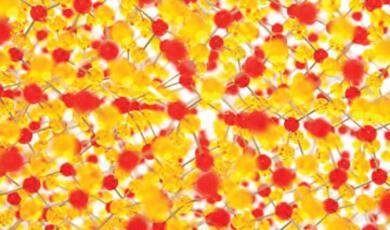
Matter consists of a mêlée of elementary particles. There are protons and neutrons, made up of quarks, and many other short-lived massive particles. One hope is to discover particles of dark matter, but this has so far eluded our best efforts.
View the sky through an x-ray telescope and the conception of the universe changes dramatically. Black holes are best seen in x-rays, because impinging gas collides with the black hole at near light speed, resulting in intense x-ray and gamma ray emission.

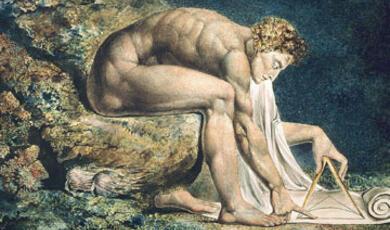
Isaac Newton saw his demonstration of the regularity of the universe as having great religious significance. Newton’s ideas were initially seen as very supportive of religion; yet within 50 years, they were being seen in a very different light.