Gresham College provides outstanding educational talks and videos for the public free of charge. There are over 2,500 videos available on our website. Your support will help us to encourage people's love of learning for many years to come.
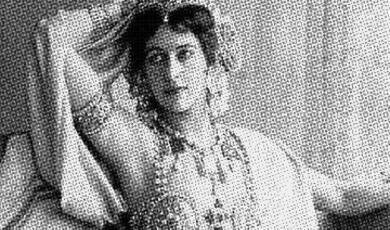
Mata Hari was an erotic dancer who, in 1917, was executed by the French army for treason. She has been portrayed as the ultimate femme fatale, extracting information from hapless men through exploiting her sensual charms.
Despite the controversy, evolution was widely accepted by many naturalists within a few years of the Origin’s appearance. An important reason for this rapid triumph was Darwin’s botanical works. Seen through evolutionary eyes, plants proved to be mobile, carnivorous, sensitive – even crafty.

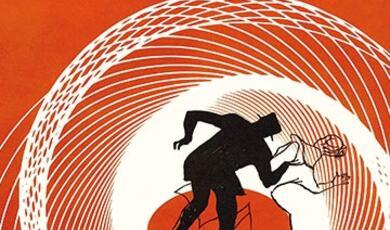
For nearly seventy years, what might be called ‘the canon’ of greatest films has been arbitrated by an international poll of critics delivering a ‘ten best’ list every decade, published in the BFI’s Sight & Sound.
China’s media provide a window into the Chinese mind, as the country asserts itself in the world as a great power. What do Chinese people think is the purpose of life? What matters most to them? In what do they believe? How do officials and journalists explain their responsibilities?
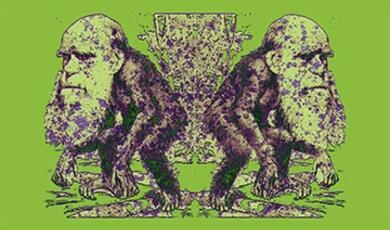
When Darwin finally published the On the Origin of Species, he tried to avoid controversy by ignoring human origins. Yet evolution was soon being attacked as the godless ‘monkey theory’.
Following the Beagle voyage, Darwin settled down to a quiet married life, relying on correspondence to gather facts. He wrote thousands of letters as he gathered facts to support his still-secret theory.
In 1920, Nellie Melba’s singing was transmitted to Europe and Newfoundland via the wireless. In 1922 the BBC began broadcasting, and from the outset sponsored new music and relayed outside broadcasts to the nation (and from 1932, to the world).
Stories about islands punctuate the careers of Michael Powell and Emeric Pressburger, from Powell’s breakthrough with Edge of the World (1936) to the Hebridean journey of I Know Where I’m Going! (1945), and the final act of their Tales of Hoffmann (1951).
World War Two set British filmmakers a challenge: to be relevant and entertaining and to inspire without patronising. Powell and Pressburger brought wit and imagination to their task, questioning what Britain stood for, warts and all.