Gresham College provides outstanding educational talks and videos for the public free of charge. There are over 2,500 videos available on our website. Your support will help us to encourage people's love of learning for many years to come.
For nearly seventy years, what might be called ‘the canon’ of greatest films has been arbitrated by an international poll of critics delivering a ‘ten best’ list every decade, published in the BFI’s Sight & Sound.
When Darwin finally published the On the Origin of Species, he tried to avoid controversy by ignoring human origins. Yet evolution was soon being attacked as the godless ‘monkey theory’.
The Brothers Grimm’s tale of Snow White has been retold dozens of times in print and the cinema over the past two centuries. A central character is the Evil Queen, Snow White’s malevolent stepmother, who tries to kill her with the help of the occult.
The story of the deep, biogeophysical planetary connections and how these are intensifying the effects of climate change and economic development, is told through personal research and expeditions to remote locations across the world (including some that were previously unexplored).
Air pollution, the usefulness of trees, ideas for a green belt are not concerns we associate with the 1600s. But John Evelyn, writer, diarist and gardener, was unusual. His thinking in Fumifugium (1661) about air quality, and Sylva (1664) about trees, seems astonishingly close to our own today.

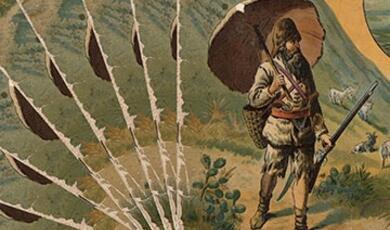
How does fiction make itself seem like fact? Professor John Mullan begins where novels begin: with Defoe’s Robinson Crusoe, which showed every novel that followed how to make a ‘strange surprising’ story seem entirely ‘probable’ (the word that eighteenth-century pioneers of fiction liked t
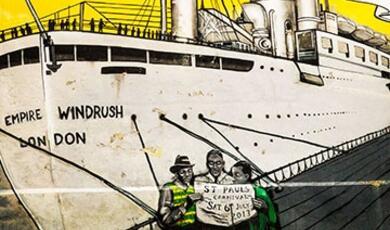
London in the 1950s and 60s was a crucible in which West Indian writers, artists, thinkers and scholars imagined new futures for the Caribbean, Britain and the world.
Following the Beagle voyage, Darwin settled down to a quiet married life, relying on correspondence to gather facts. He wrote thousands of letters as he gathered facts to support his still-secret theory.
From The Merchant of Venice to The Taming of the Shrew, it’s easy to see how Shakespeare’s plays can cause offence to contemporary audiences. Is it harder to teach Shakespeare today than in the past? Have ideas about what is offensive in Shakespeare changed over time?