Gresham College provides outstanding educational talks and videos for the public free of charge. There are over 2,500 videos available on our website. Your support will help us to encourage people's love of learning for many years to come.
Despite the controversy, evolution was widely accepted by many naturalists within a few years of the Origin’s appearance. An important reason for this rapid triumph was Darwin’s botanical works. Seen through evolutionary eyes, plants proved to be mobile, carnivorous, sensitive – even crafty.

When Darwin finally published the On the Origin of Species, he tried to avoid controversy by ignoring human origins. Yet evolution was soon being attacked as the godless ‘monkey theory’.
The story of the deep, biogeophysical planetary connections and how these are intensifying the effects of climate change and economic development, is told through personal research and expeditions to remote locations across the world (including some that were previously unexplored).
Following the Beagle voyage, Darwin settled down to a quiet married life, relying on correspondence to gather facts. He wrote thousands of letters as he gathered facts to support his still-secret theory.
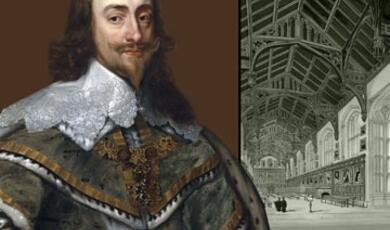
During the Civil War Charles I’s court, denied access to its usual country residences, was forced to set itself up in a series of makeshift locations. The most important of these was Oxford which Charles converted into a large and well-organised courtly campus.
This lecture will begin with Bacon’s imagined garden, then consider the long-term promise of the experimental or scientific garden, which would eventually lead to today’s biotechnologies.
The origin of life is one of the biggest questions in science, but until recently it was, experimentally, a question in chemistry. Now, gene sequences and a better understanding of cell growth under extreme conditions are giving insights from biology.