Gresham College provides outstanding educational talks and videos for the public free of charge. There are over 2,500 videos available on our website. Your support will help us to encourage people's love of learning for many years to come.
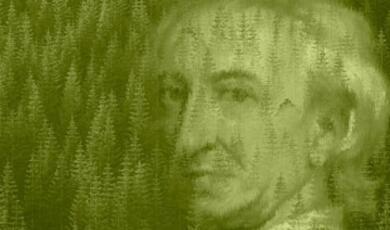
Air pollution, the usefulness of trees, ideas for a green belt are not concerns we associate with the 1600s. But John Evelyn, writer, diarist and gardener, was unusual. His thinking in Fumifugium (1661) about air quality, and Sylva (1664) about trees, seems astonishingly close to our own today.
Well-trained eyes can be remarkably useful for capturing light curves of evolving objects in the cosmos, even contributing to modern research programmes.
Psychological studies show that humans overweight tangible factors and underweight intangible ones when making decisions. This talk shows how these biases affect the stock market – it focuses excessively on short-term profit, but ignores environmental, social and governance (ESG) factors.
Algorithms, loosely translated, are systems for doing things. Algorithms are thus the link from pre-history to the modern world – without algorithms we would have an inanimate universe without all the mess and complexity of real life. It turns out that the history of algorithms is messy.
At longer wavelengths than the normal optical wavelengths to which human eyes are normally sensitive, is the radio part of the electromagnetic spectrum.
Following the Beagle voyage, Darwin settled down to a quiet married life, relying on correspondence to gather facts. He wrote thousands of letters as he gathered facts to support his still-secret theory.
Mars has changed since it formed 4.6 billion years ago. When life started on Earth ~4 billion years ago, Mars was habitable too, with volcanism, a magnetic field, surface water and a thick atmosphere. Today, Mars is cold and dry, with a thin atmosphere and harsh surface.

The Efficient Market Hypothesis argues that stock markets are rational – they take into account all relevant information, and incorporate it in an unbiased way. This talk will present evidence that stock prices are instead driven by human psychology.