Gresham College provides outstanding educational talks and videos for the public free of charge. There are over 2,500 videos available on our website. Your support will help us to encourage people's love of learning for many years to come.
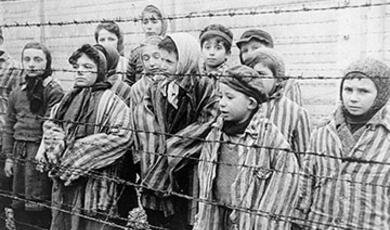
The 2020 Alfred Wiener Holocaust Memorial Lecture Series - 2020 marks the 75th anniversary of the liberation of Auschwitz, the most lethal of all Nazi camps.
Drones are changing the face of war in the 21st century for combatants and civilians. Today drones carry out targeted assassinations, bombings and intelligence-gathering, and the forces that deploy them aim to minimise the loss of life.
This lecture examines the work of Hugo de Vries, a Dutch botanist who was one of the first to claim that science would allow plants and animals to be designed to order.
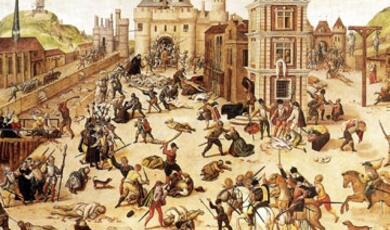
Europe’s Wars of Religion were fought against entire populations, and were punctuated by events remembered as atrocities: such as the siege of Leiden in 1573-4 or, most notoriously, the St Bartholomew’s Day Massacres in France in 1572.
The lecture will show how Prohibition animated combatants on both sides, generating two Americas that were barely comprehensible to each other, and how the truce declared during depression and war would not last.
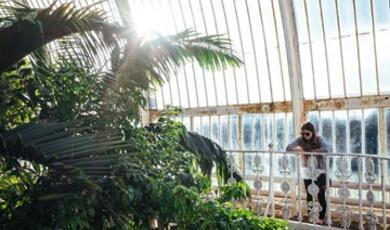
Sydney’s botanic garden, founded in the early nineteenth century, was expected to ship new plants 'home' to the Royal Botanic Gardens, Kew, from where they could be transplanted to other colonial gardens, to see if they could become valuable new crops to enrich the British Empire.
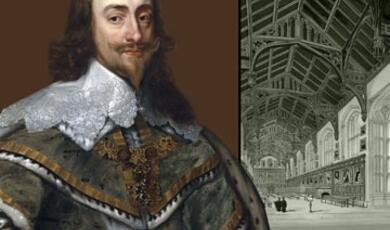
During the Civil War Charles I’s court, denied access to its usual country residences, was forced to set itself up in a series of makeshift locations. The most important of these was Oxford which Charles converted into a large and well-organised courtly campus.

This lecture will begin with Bacon’s imagined garden, then consider the long-term promise of the experimental or scientific garden, which would eventually lead to today’s biotechnologies.
We will need an aggressive strategy to ensure the safety of agricultural yields and food in the future especially in drought- prone and even temperate zones.